Journal
Travertine or marble: the real differences, and which to choose
·The Pietra team
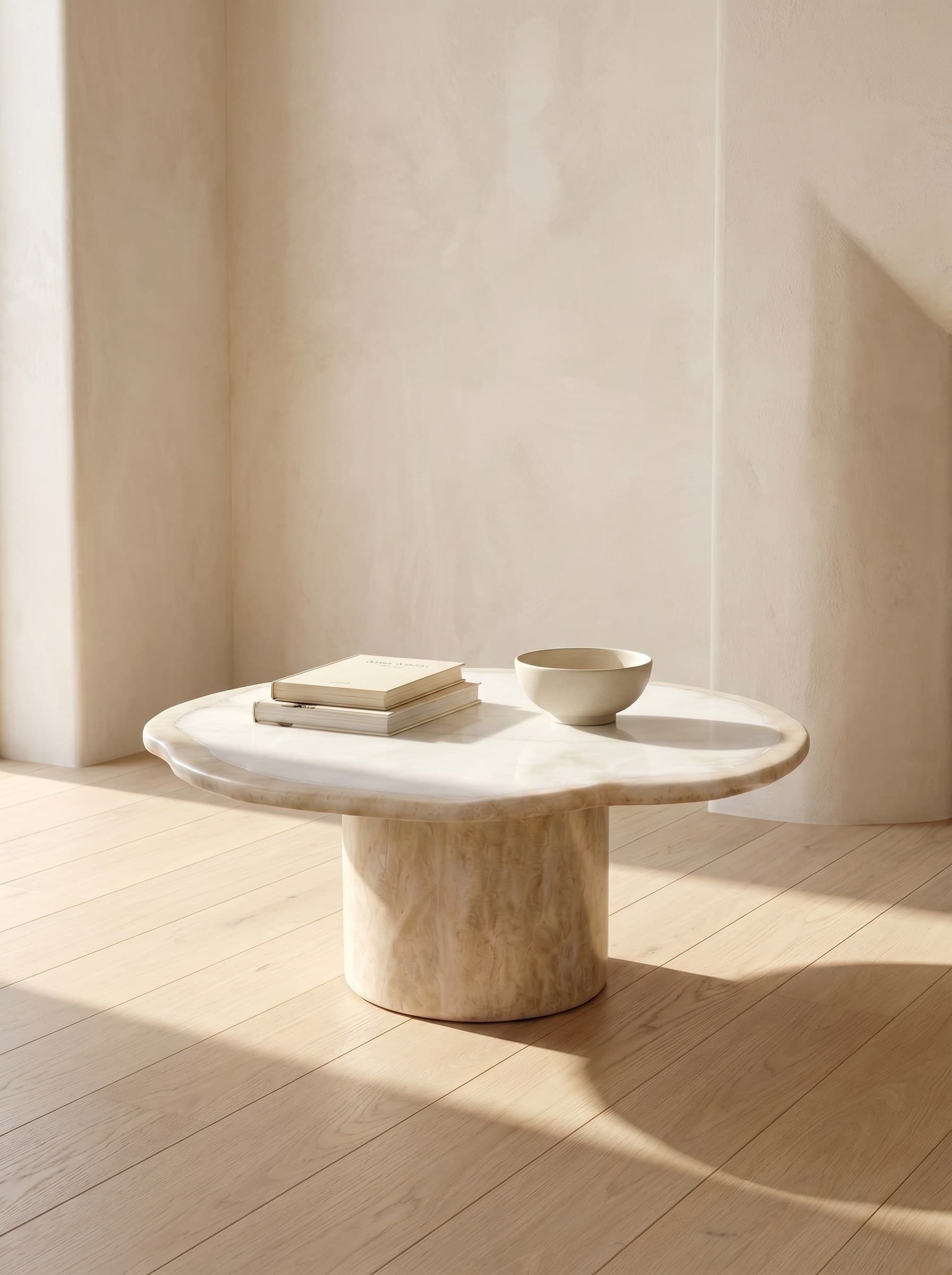
Travertine and marble have shared top billing for centuries: the Colosseum was raised with the first; Michelangelo’s David emerged from the second. In contemporary furniture they meet again, and get mixed up again. They are sold side by side, photographed alike and sometimes named as synonyms. They are not.
They are different stones with different geological origins, and that difference shows in the touch, the price, the maintenance and the way they age in your living room. This guide lays out the real differences (no showroom myths) so you can choose the stone of your next piece with confidence.
Two origins, two characters
Travertine is a sedimentary rock. It forms at the surface, near hot springs, as mineral-rich water evaporates and deposits layer upon layer of calcite. Gas bubbles trapped along the way leave their signature: the pores and small voids that make travertine unmistakable. It is, quite literally, stone that was born breathing.
Marble is a metamorphic rock. It begins as limestone, travertine’s family, but millions of years of pressure and heat underground recrystallise its structure completely. The result is a denser, tighter-grained stone in which trapped minerals draw the veining that made it famous: the smoky grey of Carrara, the plum of Calacatta Viola, white over black in Nero Marquina.
The practical consequence: travertine is warm, matte and textured; marble is dense, cool to the touch, and capable of a mirror polish travertine will never reach.
Porosity: the difference you live with daily
Porosity is the difference that matters most on a table that gets used. Travertine is naturally porous: untreated, it absorbs liquids quickly. That is why it is worked in two ways: filled, with the pores closed with mineral filler for a smooth, practical surface, or unfilled, with the pores left visible: more textural, and more demanding. Either way, a penetrating sealer is essential, and it turns the stone into a surface perfectly fit for everyday life.
Marble is far less porous, but not invulnerable: its Achilles heel is not absorption but etching: the dull mark acids (lemon, wine, vinegar) leave by dissolving the surface calcite. It shows most on polished finishes; on honed surfaces, the way we almost always work, it is far more forgiving.
In practice: both want periodic sealing, and neither tolerates acidic cleaners. The exact routines are covered in our guide to cleaning and sealing travertine.
Travertine vs marble at a glance
| Travertine | Marble | |
|---|---|---|
| Origin | Sedimentary, hot springs | Metamorphic, pressure and heat |
| Texture | Porous, matte, warm | Dense, tight grain |
| Tones | Creams, beiges, walnut | Whites, greys, blacks, coloured veining |
| Typical finish | Honed (filled or unfilled) | Honed or mirror polish |
| Feel | Organic, calm | Formal, sculptural |
| Relative price | More accessible | Higher, variety-dependent |
| Care | Periodic sealing, no acids | Periodic sealing, no acids |
Price, plainly
Piece for piece, travertine usually costs less than marble. It is more abundant, quarried at the surface, and somewhat quicker to work. Within marble the range is wide: a classic Carrara is relatively contained; a Calacatta Viola with spectacular veining can cost several times more, because each block is priced almost as a one-off work.
In our atelier, the typical difference between the same table in travertine and in a characterful marble sits around 30–60%. Neither option is "better": they are different budgets for different kinds of presence.
And for a coffee or dining table?
For a coffee table, travertine is our first recommendation. It lives at hand height and eye height: its warmth and texture are enjoyed daily, it forgives real use, and it keeps a living room calm. Round forms and volumes suit it especially well, as you can see across our natural stone coffee tables. A boldly veined marble, by contrast, turns the low table into the protagonist, perfect when the rest of the room stays quiet.
For a dining table, both work, with nuance. Honed, filled travertine is surprisingly practical for daily meals: matte, warm, unafraid of real life. Marble brings a formality that asks for table linen, trivets and a little more care with wine and citrus. Our dining tables are carved in both stones; the final choice usually depends more on the light and character of the room than on technicalities.
Three myths worth retiring
- "Travertine is fragile." False: it is the stone of the Colosseum and of two thousand years of Roman architecture. It asks for a sealant and neutral soap, not a display case.
- "Marble doesn’t stain." It absorbs less, but acids etch it exactly as they etch travertine. The rule is the same for both: coasters, a cloth, and no lemon.
- "They look so alike it makes no difference." Until they share a room: travertine whispers and marble declaims. The choice sets the tone of the entire space.
What actually matters
Choose travertine if you want warmth, texture and a stone that accompanies without imposing. Choose marble if you want veining, contrast and a piece with sculptural ambition. In both cases, insist on hand-carved natural stone: the difference between a true block and a veneer shows on day one and rewards you for decades.
If the piece in question is a low table, our natural stone coffee table guide goes into sizes, shapes and bases in detail. And if you are weighing stones for a specific project, write to us: sending photos of real blocks before carving is part of how we work.
The collection
The stone, in person
Every piece is hand-carved to order, with the unique veining of its block. Start with the coffee tables.