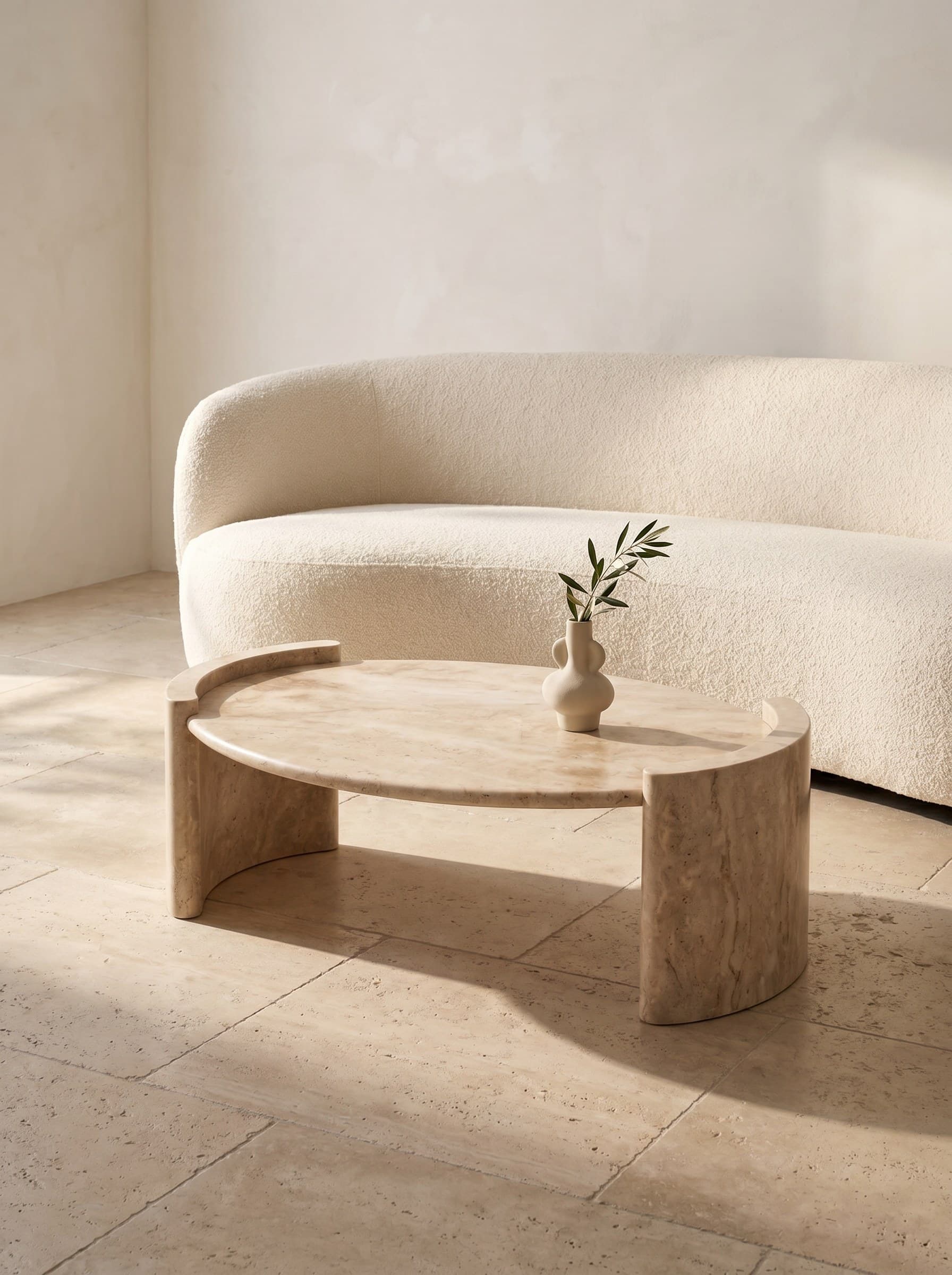
Which interior styles does travertine suit? A full guide
Does travertine work in a modern, minimalist or mediterranean interior? Style by style: what defines it, why the stone fits, how to decide and which pieces to choose.
Read article →
Journal
What we learn working with stone, told without hurry: materials, care, and how to choose pieces that stay for decades.
Does travertine work in a modern, minimalist or mediterranean interior? Style by style: what defines it, why the stone fits, how to decide and which pieces to choose.
Read article →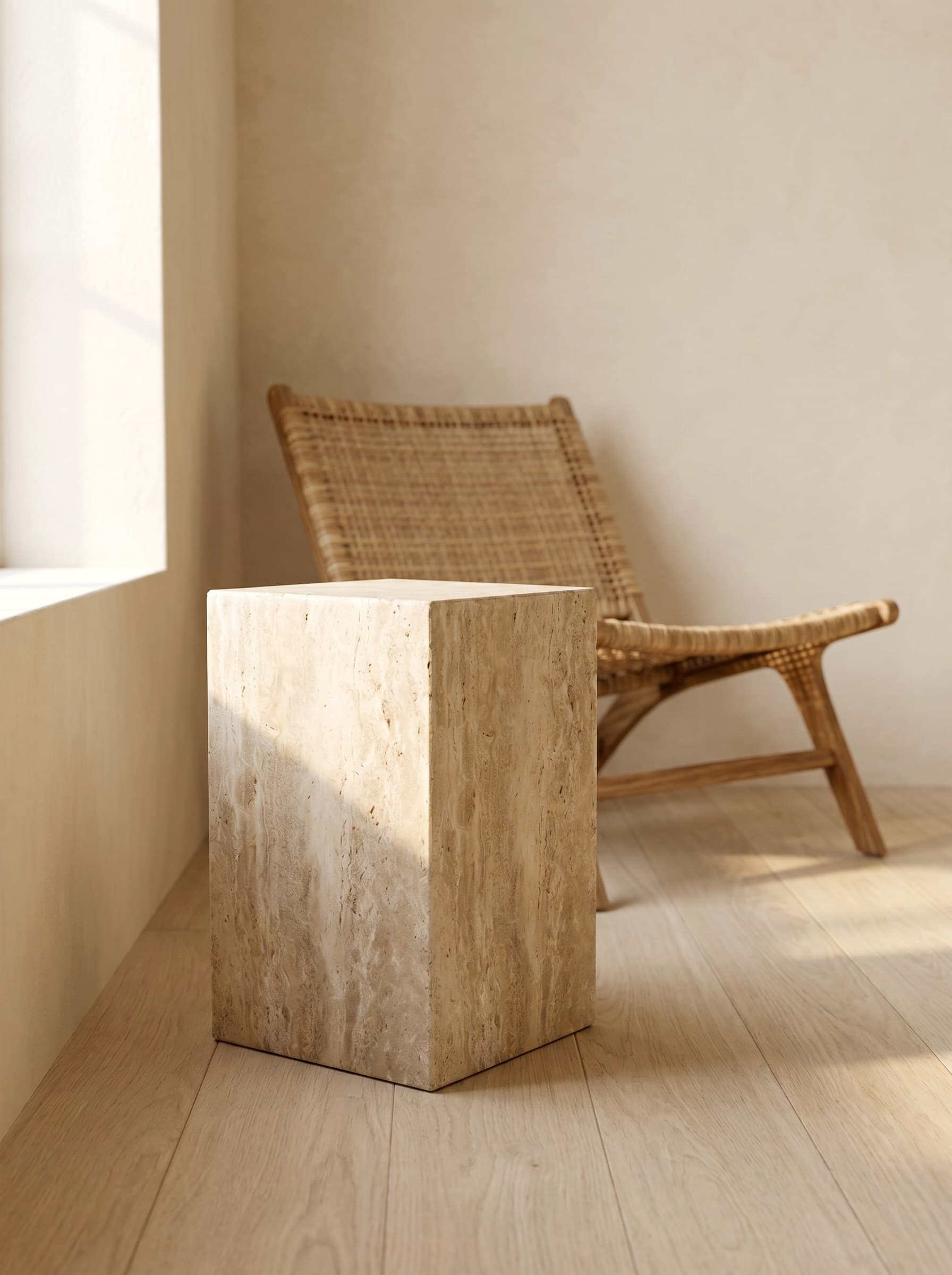
Porcelain, sintered, resin or laminate: convincing in a photo, not up close. Five signs to recognise a piece of natural travertine, and not buy an imitation.
Read article →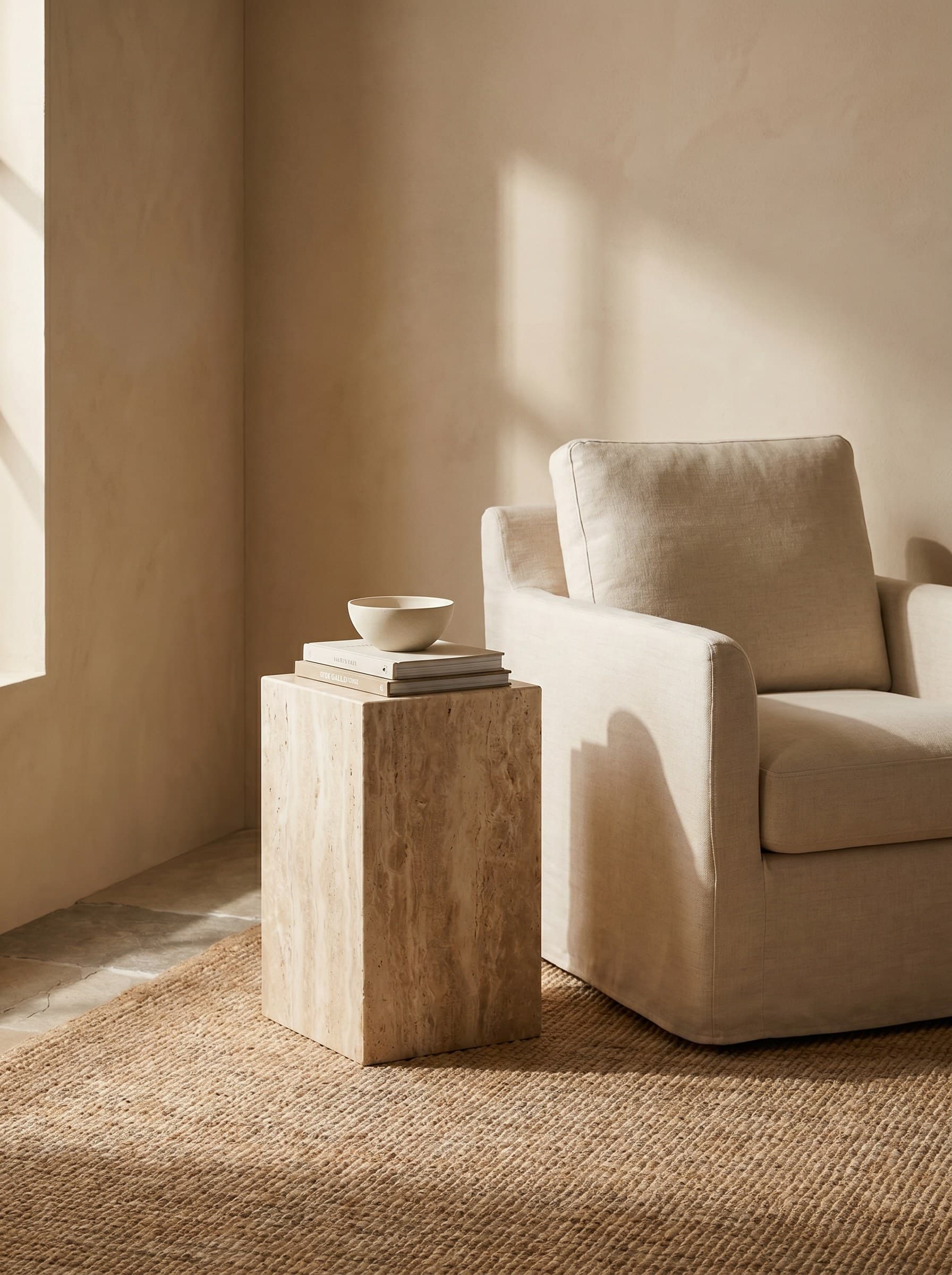
Every piece begins as a hand-selected block and is carved, honed and sealed in the atelier. We walk you through the full process, why it is made to order, and why we ask for 60 to 90 days.
Read article →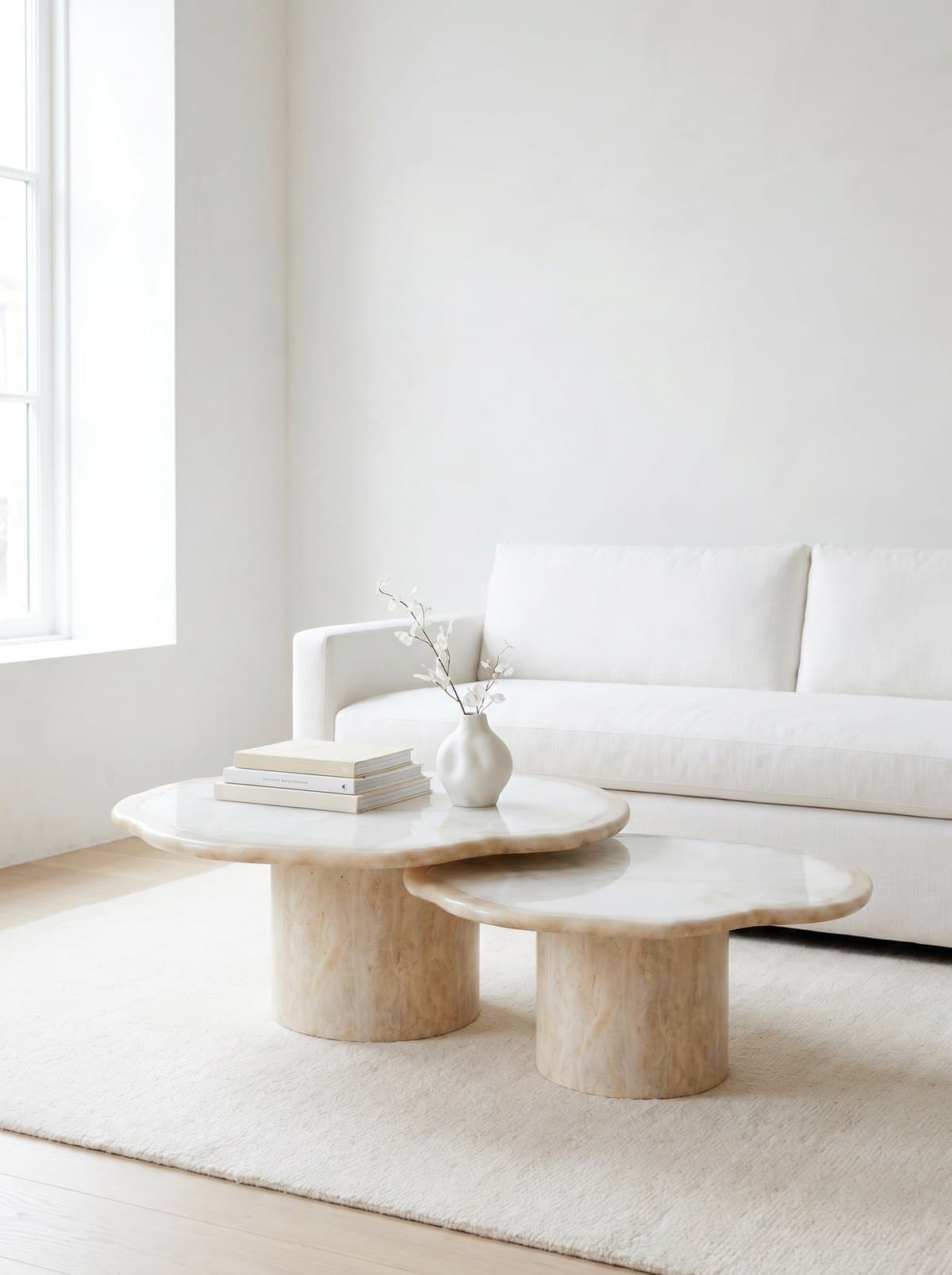
In 2026 natural stone furniture turns warm, sculptural and made to last. Honed travertine, curved forms and one-of-a-kind pieces set the direction in interiors.
Read article →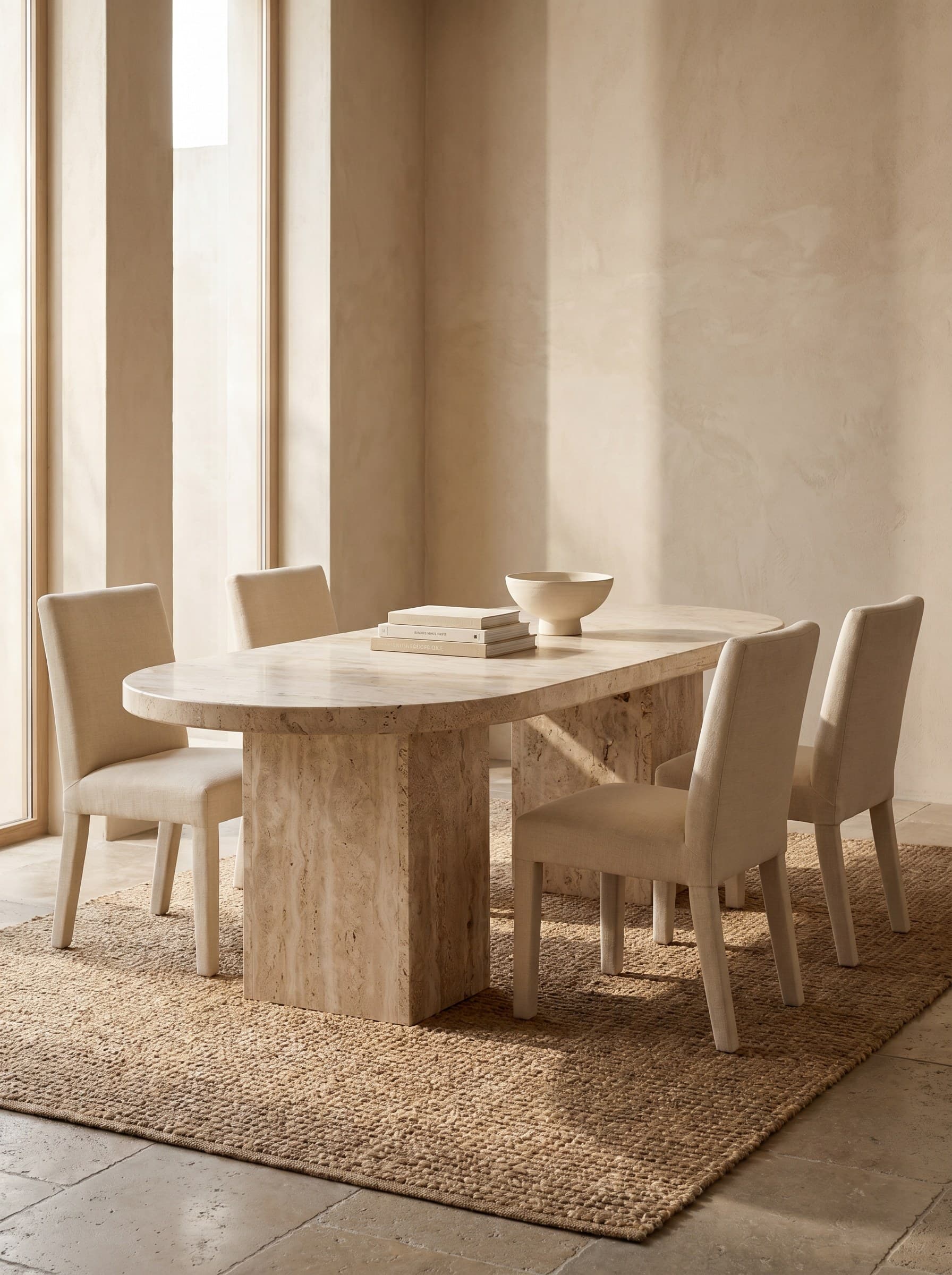
Find the right dining table with two simple rules: about 60 cm of width per person and roughly 100 cm of clearance to the wall. A sizing table by number of diners, shapes and height.
Read article →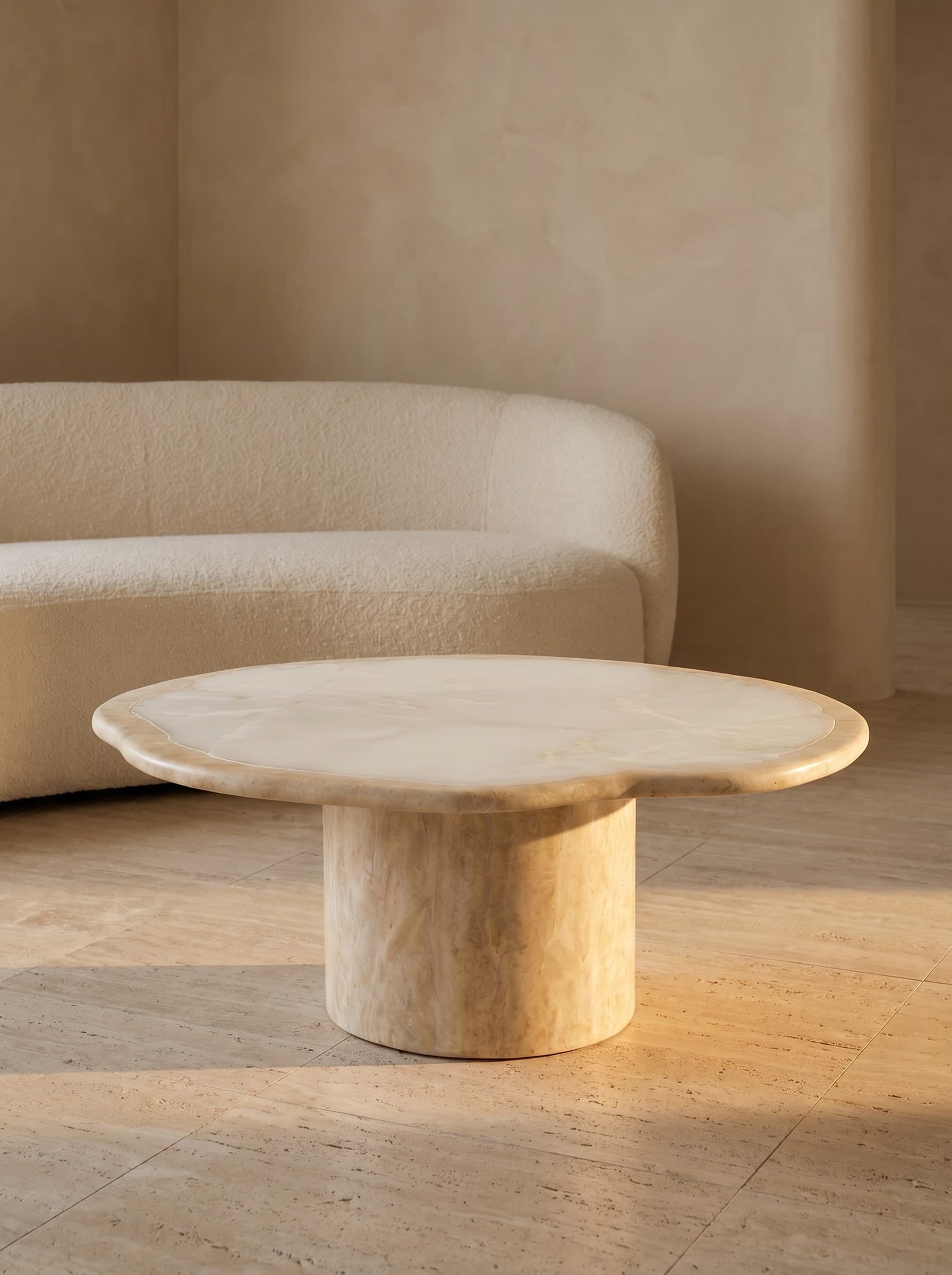
pH-neutral soap and a soft cloth daily, never acids, periodic sealing and blotting spills at once. A complete guide to clean, protect and remove stains and etching from marble.
Read article →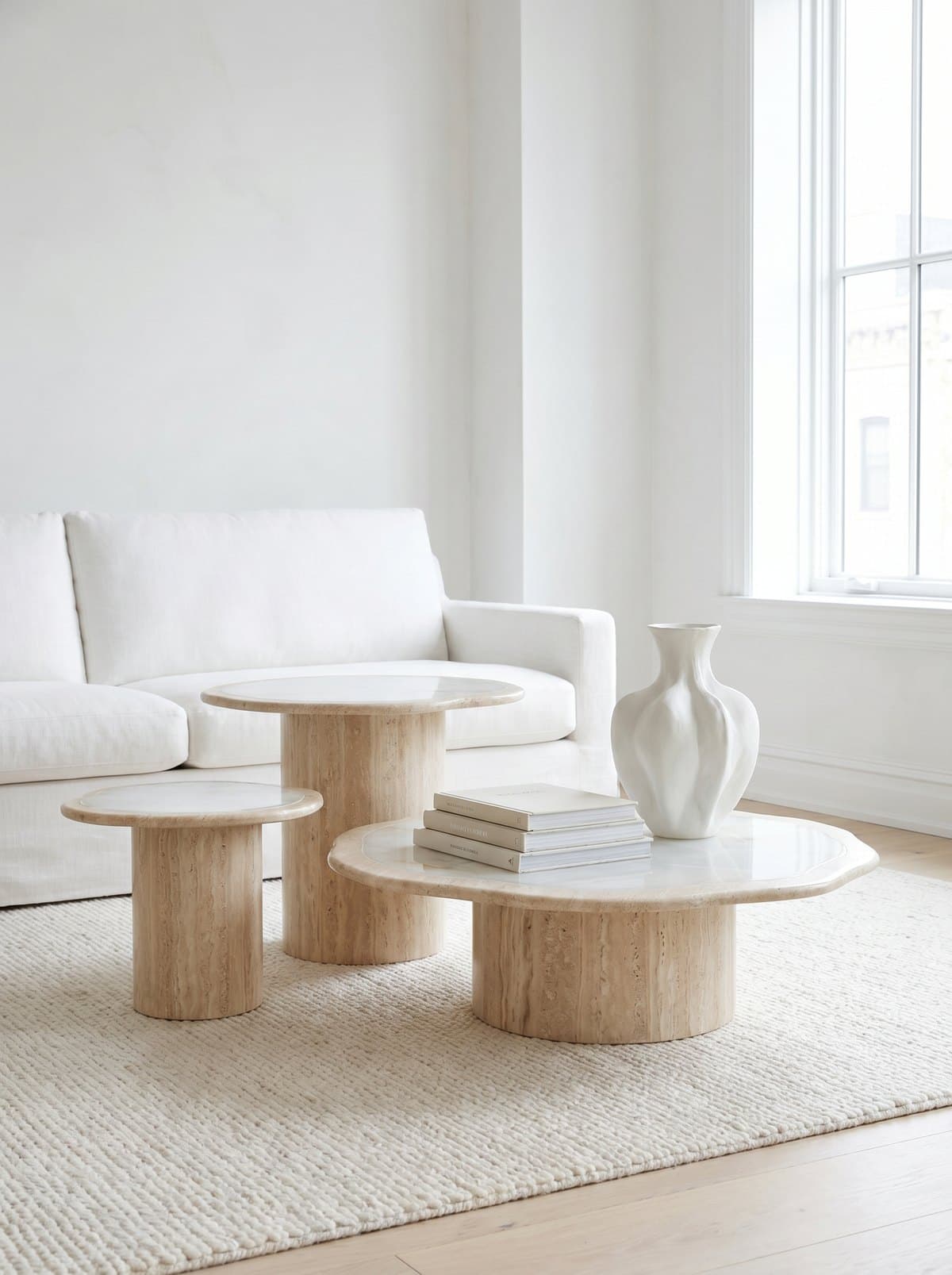
Calacatta and Carrara are the two great white marbles of Italy. Carrara brings soft, feathery grey veining; Calacatta brings a whiter ground with bold golden veins. The difference, price and which to choose.
Read article →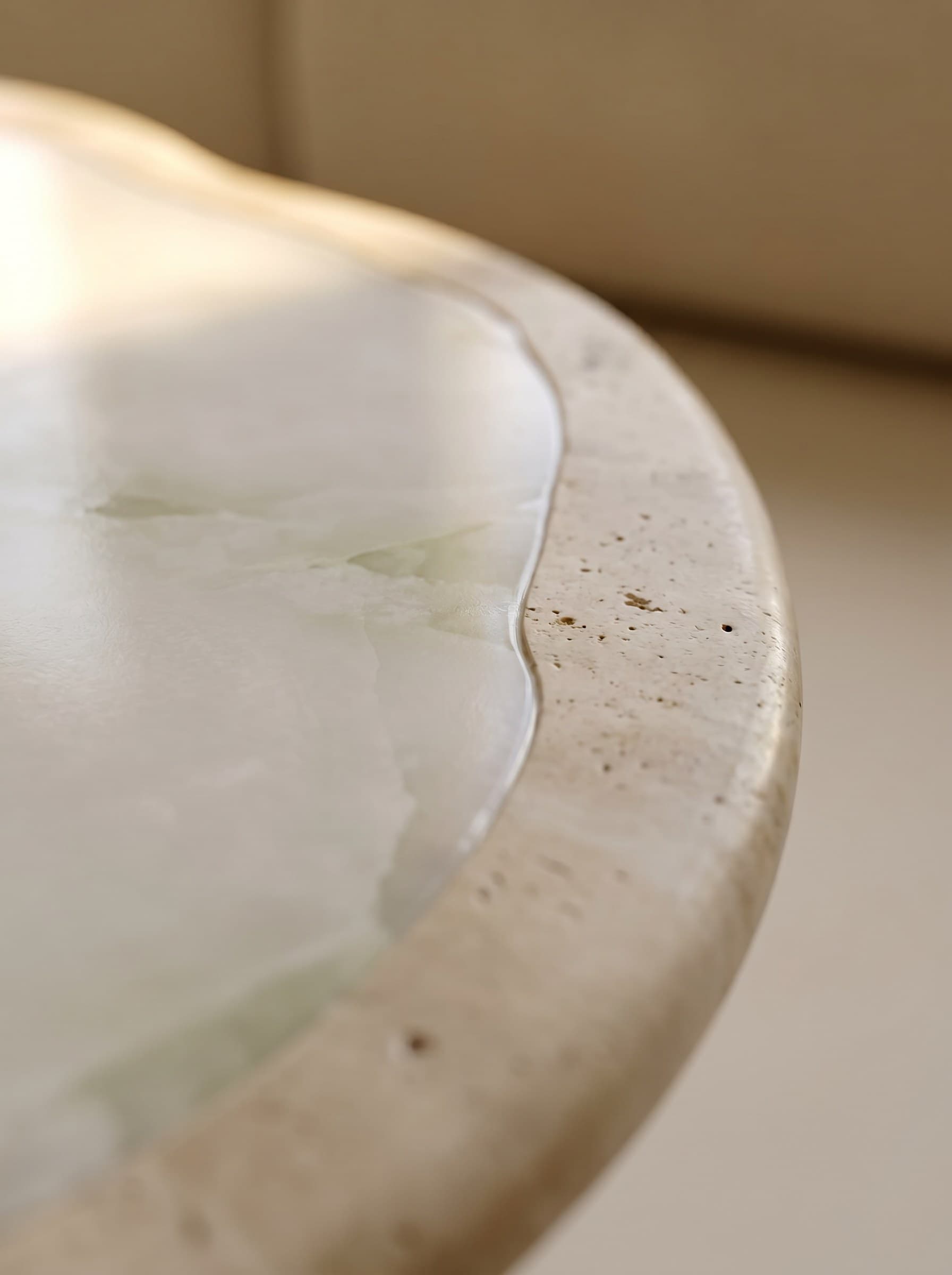
Types of marble are grouped by colour and origin. Meet the main marbles for furniture (Calacatta Viola, Carrara, Nero Marquina and Rosso Levanto) and learn how to choose yours.
Read article →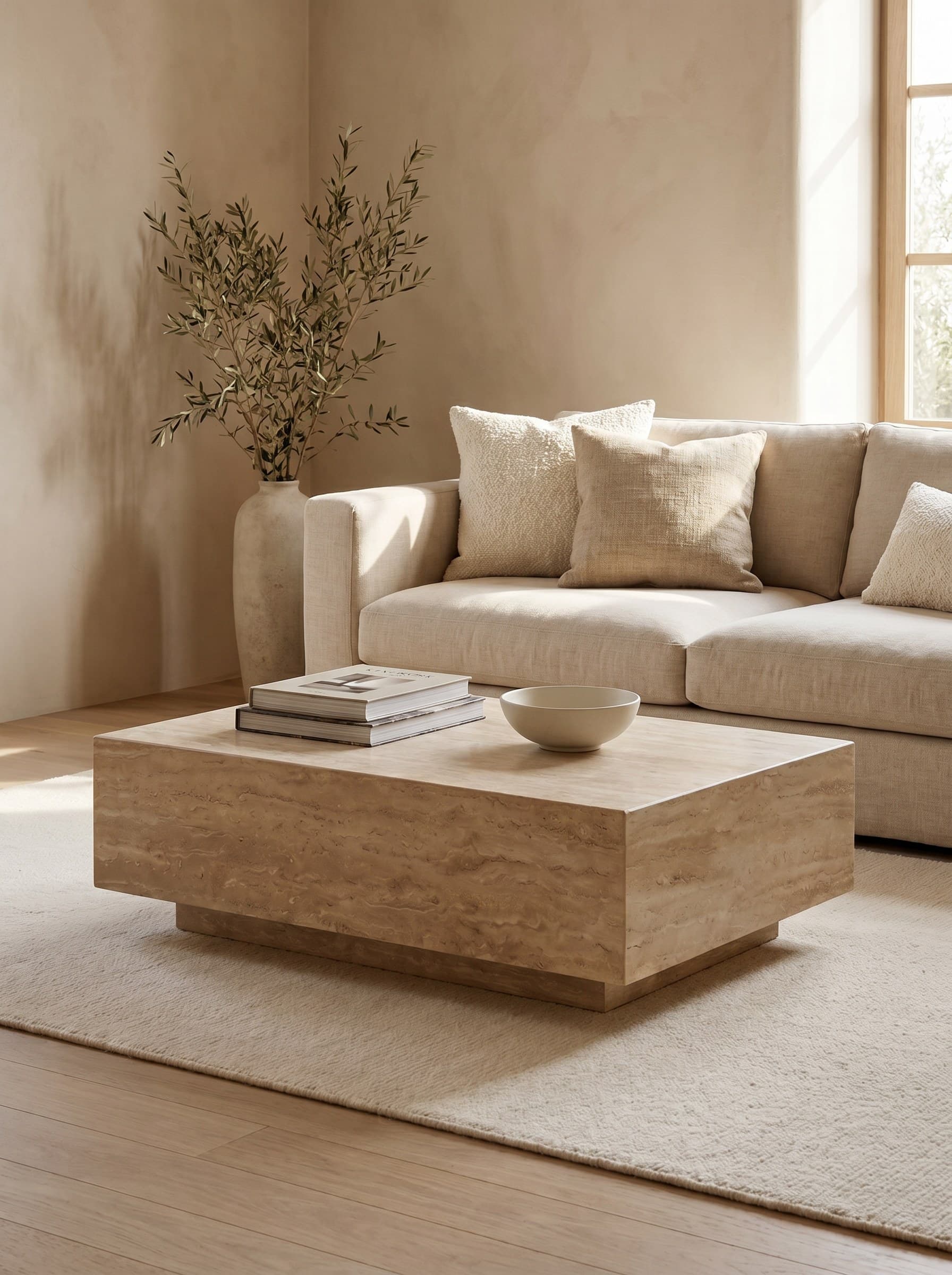
Act fast, blot without wiping and identify the stain type. For set-in oil, a poultice draws the stain up from the pore. A step-by-step guide by stain type on travertine.
Read article →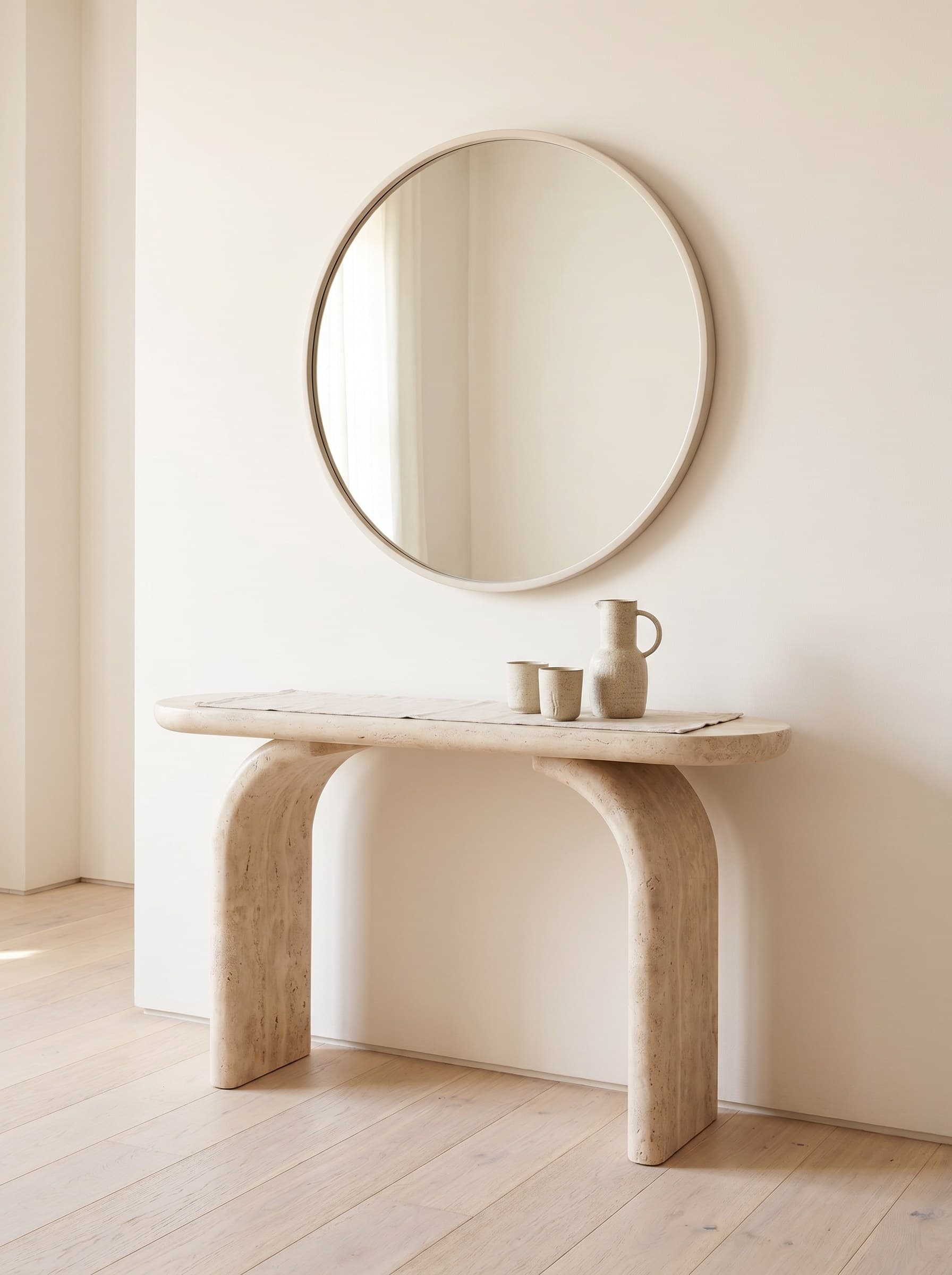
Travertine can live outdoors with the right finish and sealing. It works best in sheltered settings, like a covered porch or terrace. A guide to outdoor care.
Read article →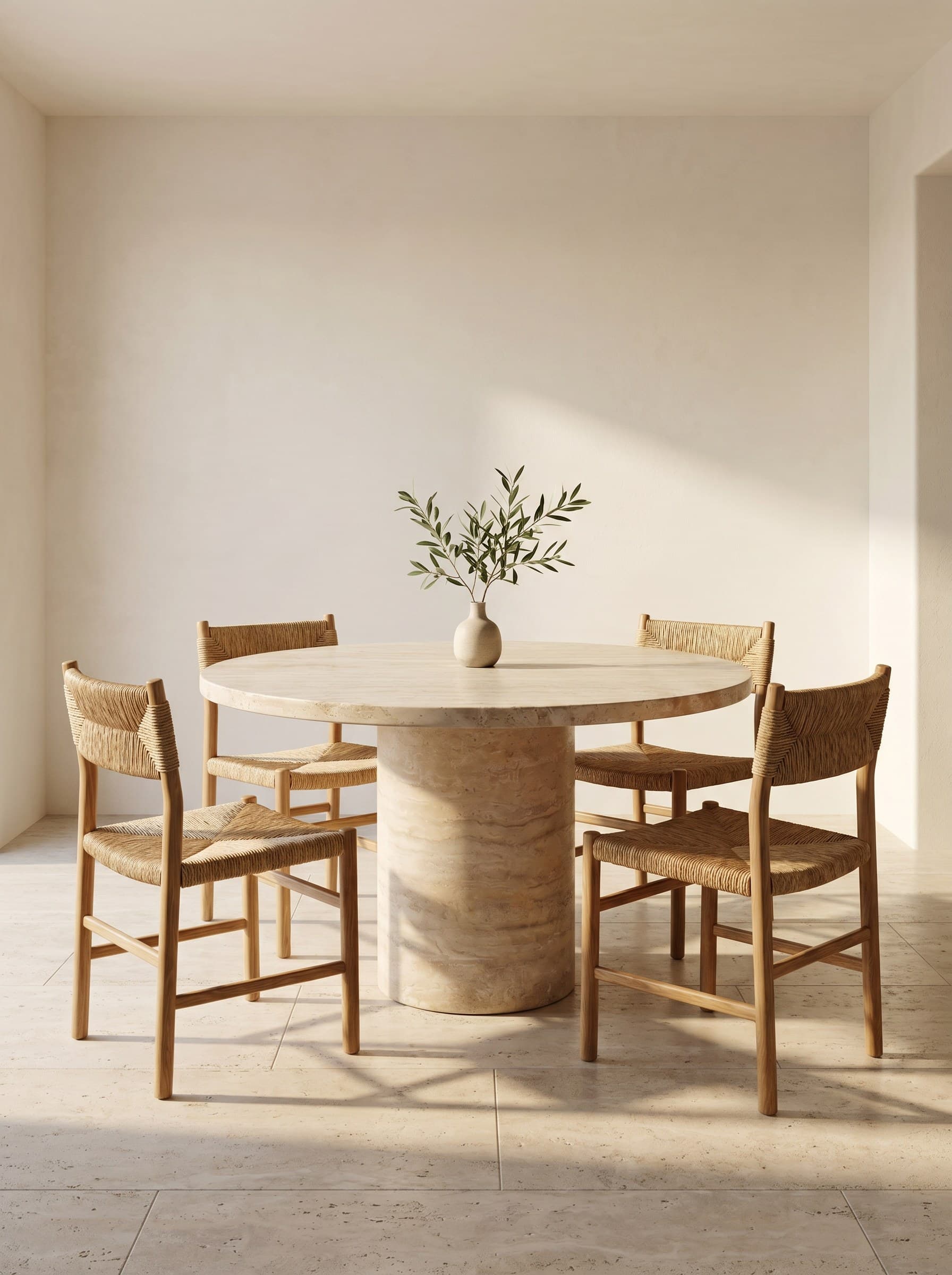
Round, oval or rectangular: the shape follows the sofa layout, the size of the room and the traffic. Concrete rules on sizes, clearances and height so you choose well.
Read article →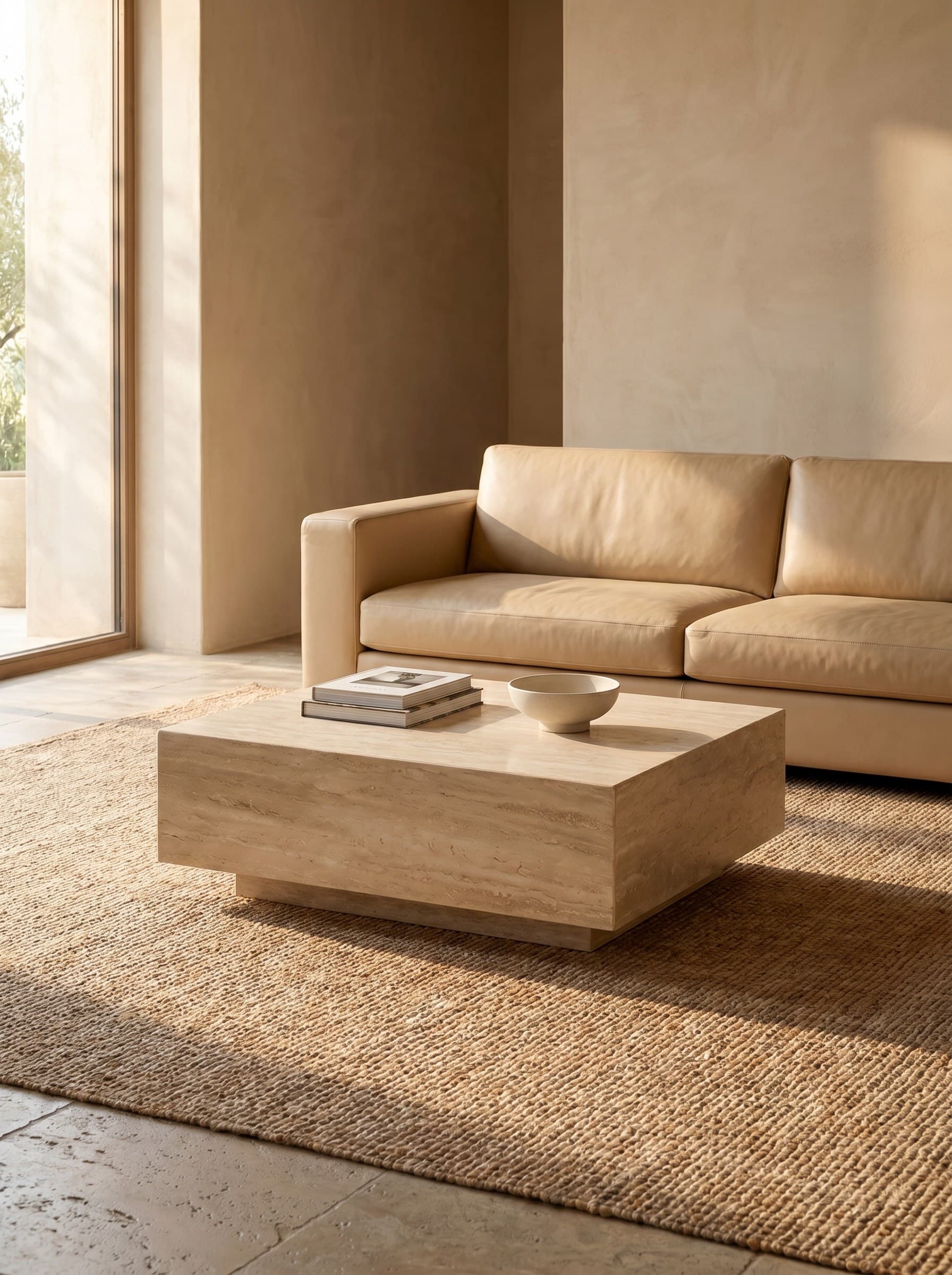
Travertine unites Japanese warmth and Scandinavian restraint through honest material. A practical guide to japandi living rooms: palette, materials and the pieces that matter.
Read article →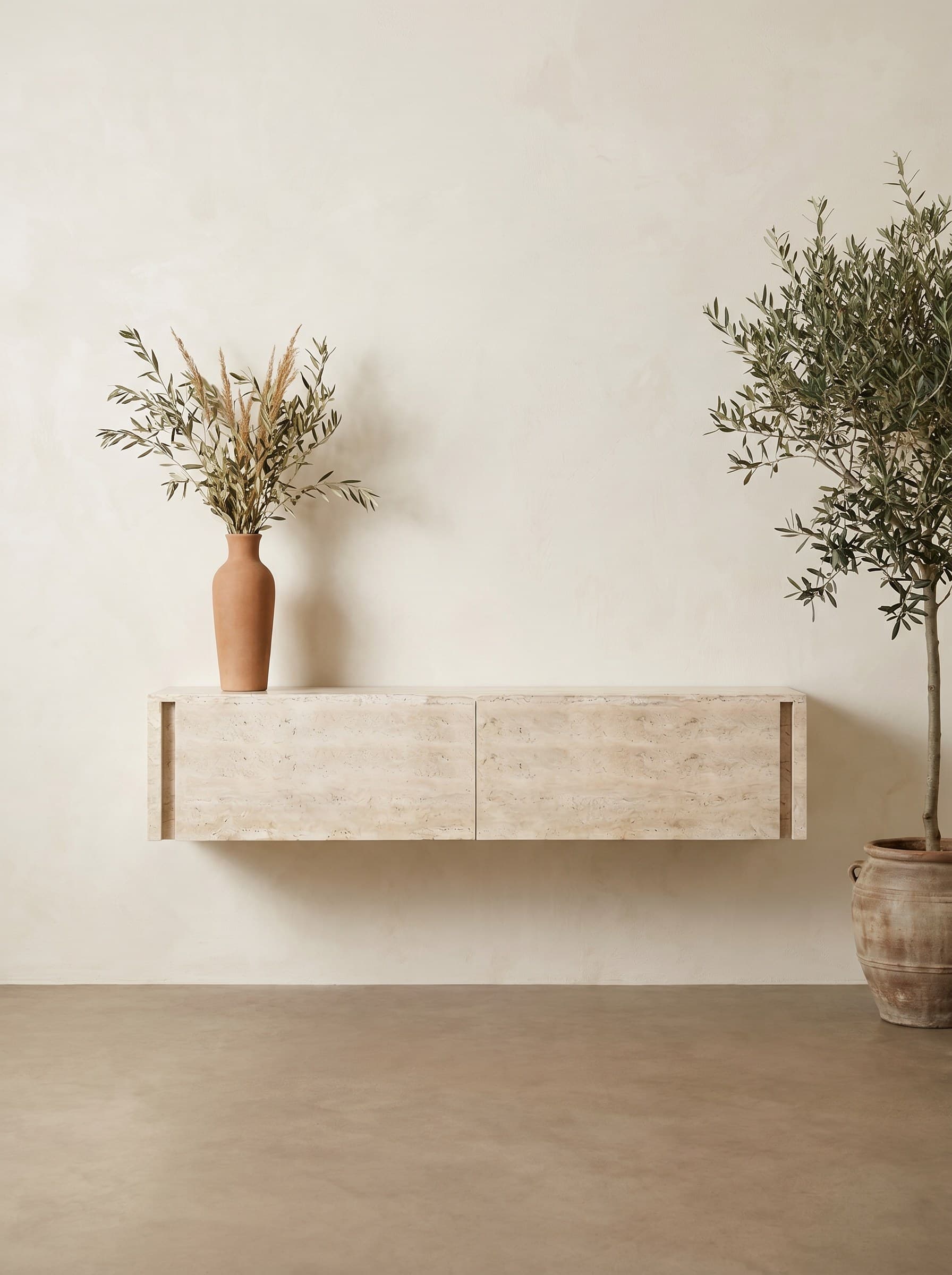
Travertine is not outdated. It is enjoying a strong revival in japandi and warm minimalism, and it remains a timeless material used since Ancient Rome.
Read article →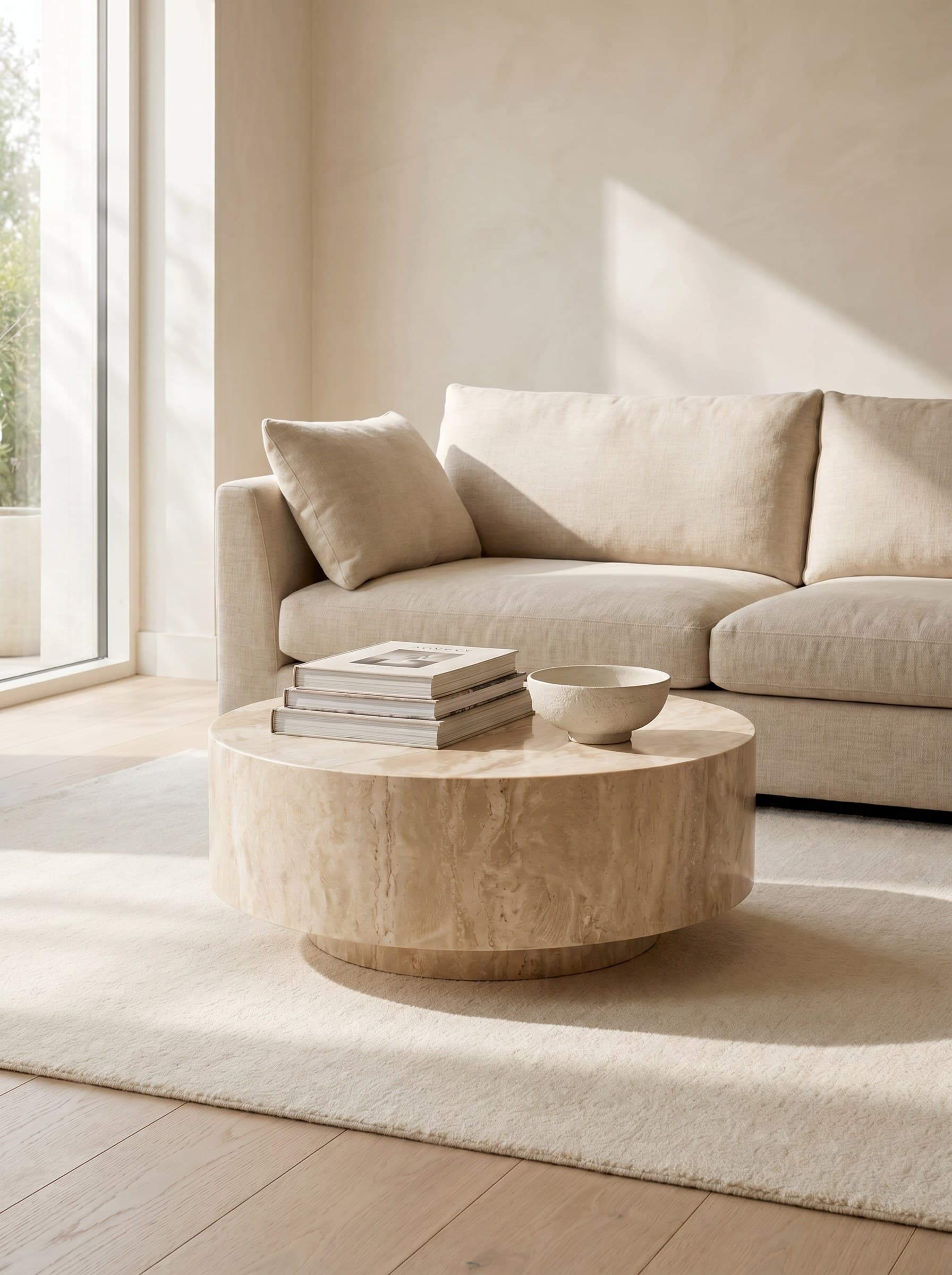
Travertine is durable and timeless, yet porous. We weigh the real pros and cons: hardness, staining, heat, and why it should be sealed every 12 to 18 months.
Read article →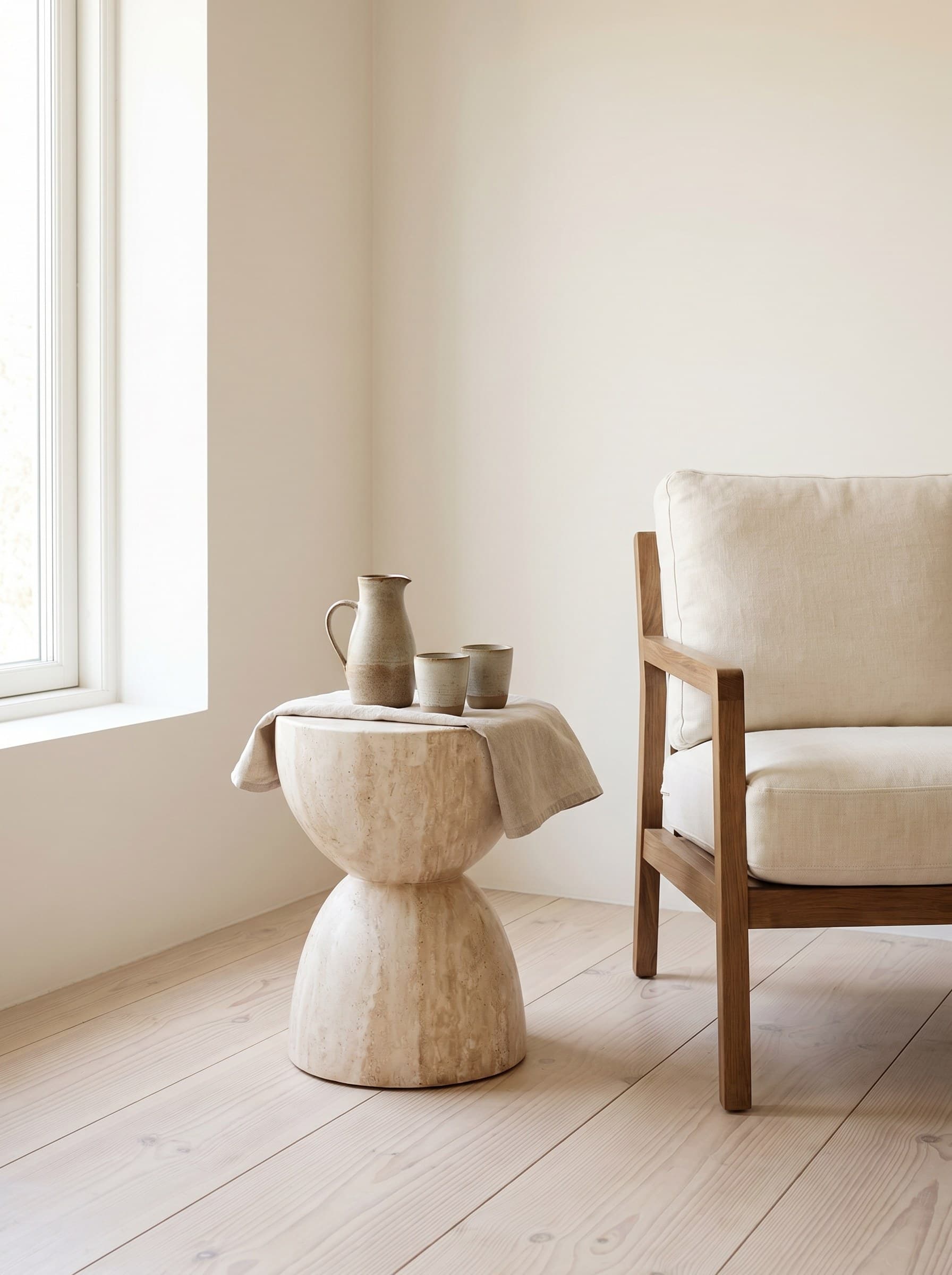
Travertine is classified by colour and origin (Roman, Navona, silver, walnut, red) and by finish (filled or unfilled, honed, polished, tumbled). A clear guide to choosing the stone for your next piece.
Read article →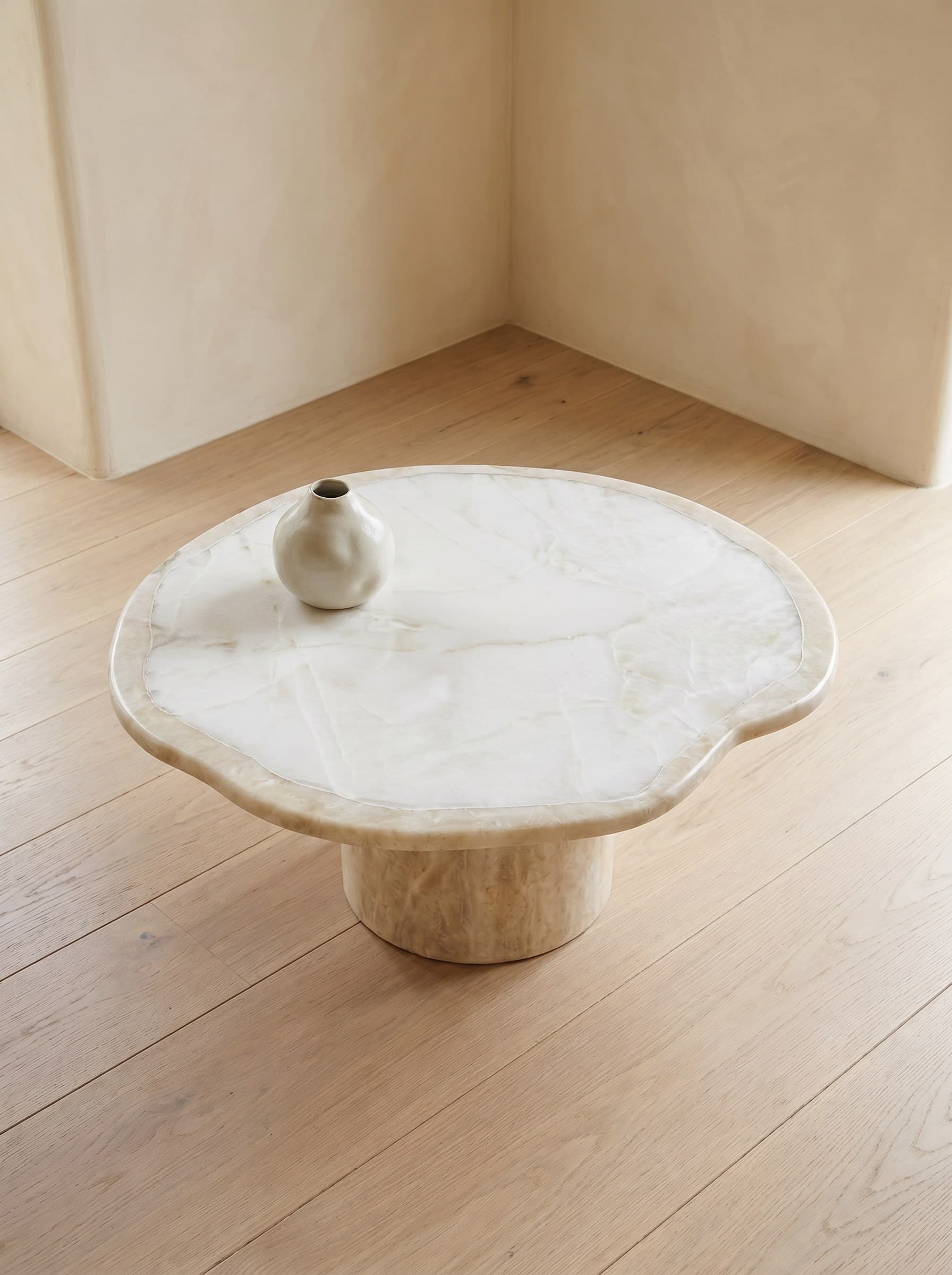
Travertine is a calcareous rock formed at thermal springs, known for its natural pores and warm tones. Origin, types, pros and care, explained without myths.
Read article →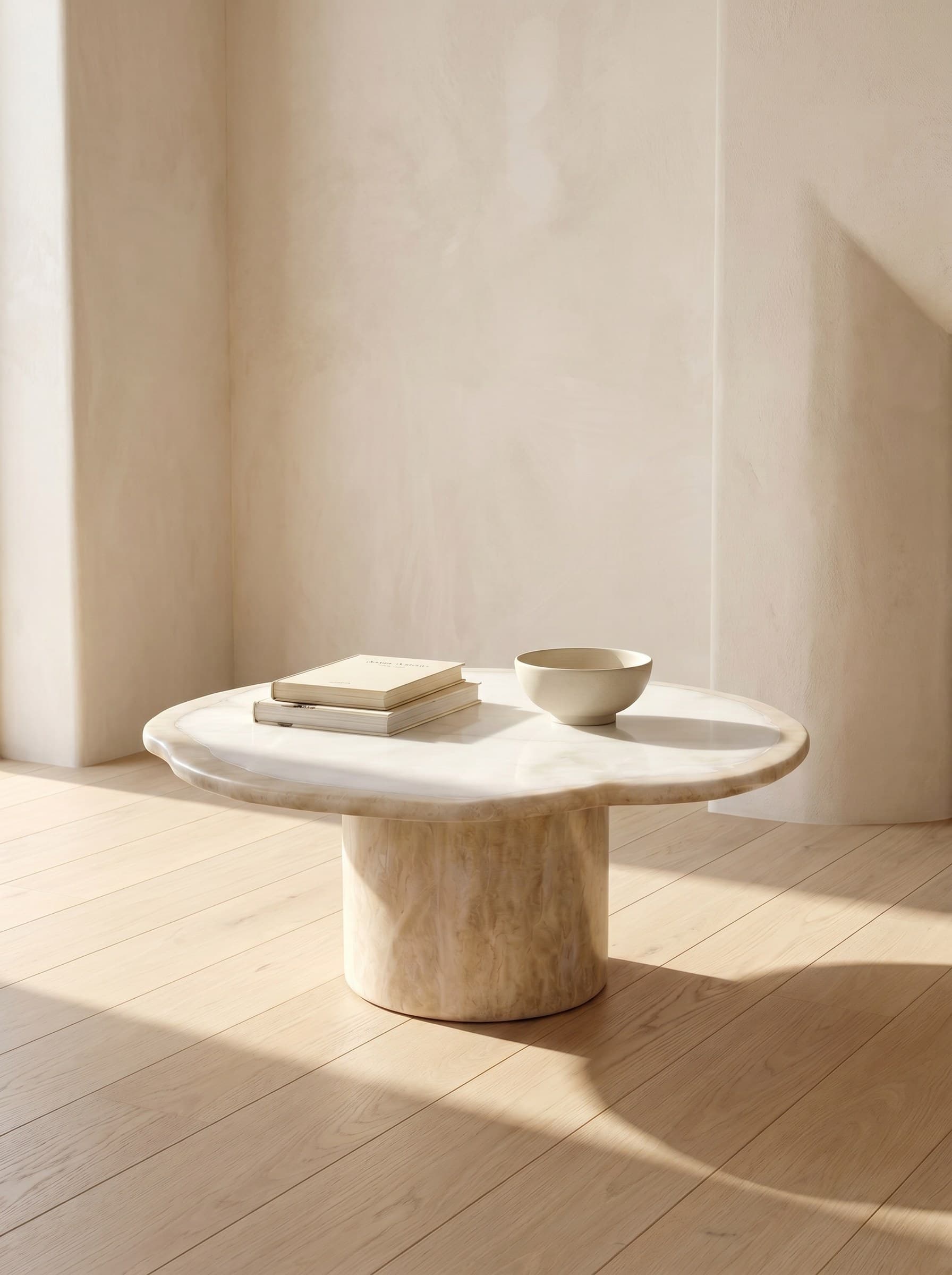
They share prestigious quarries and centuries of architecture, yet they are different stones. Composition, porosity, price and use cases, explained without myths, so you choose your next table well.
Read article →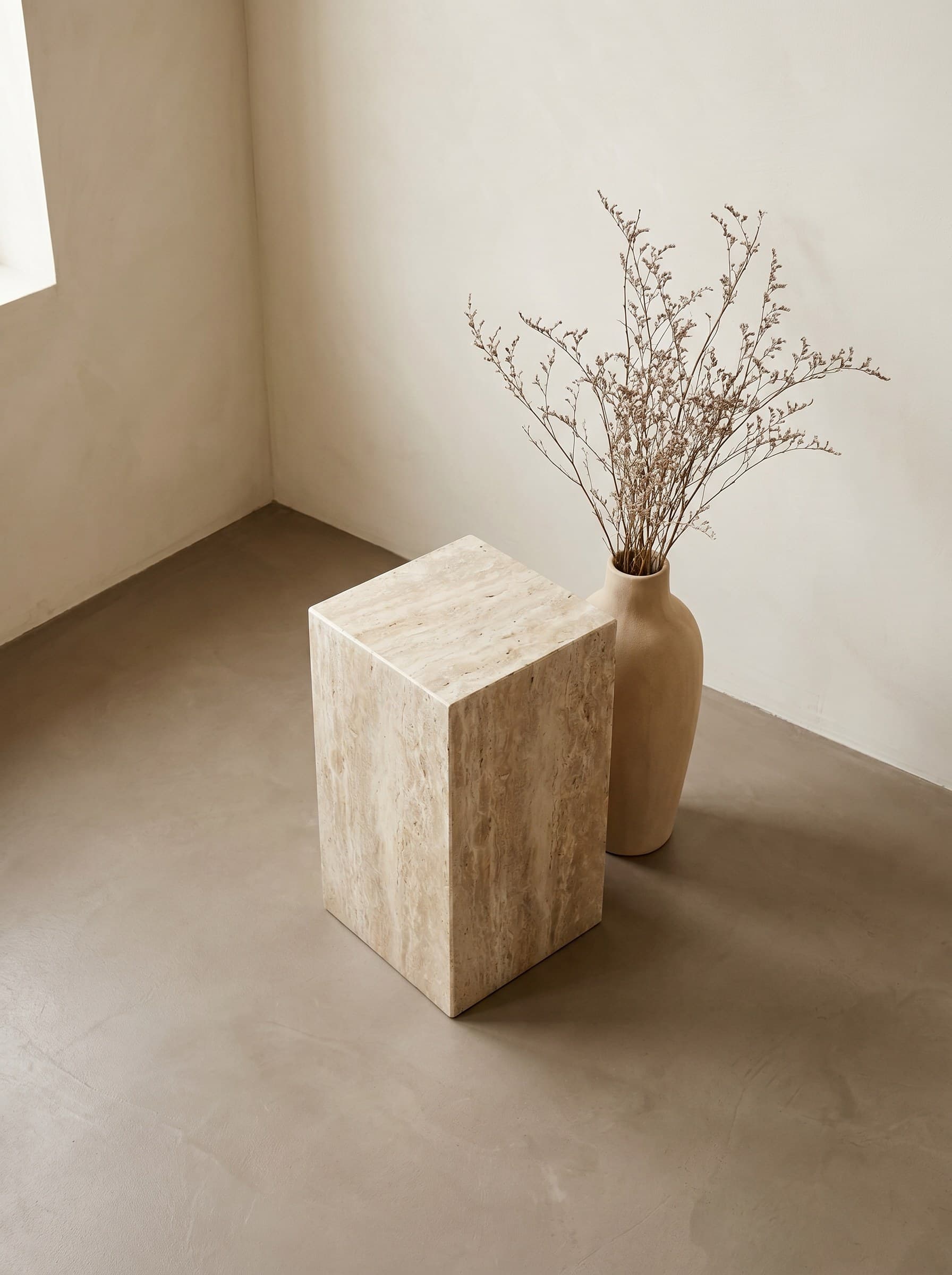
Travertine asks for little, but it asks precisely: neutral soap, no acids, and a sealant renewed on time. The complete routine, step by step, plus what to do when a stain happens.
Read article →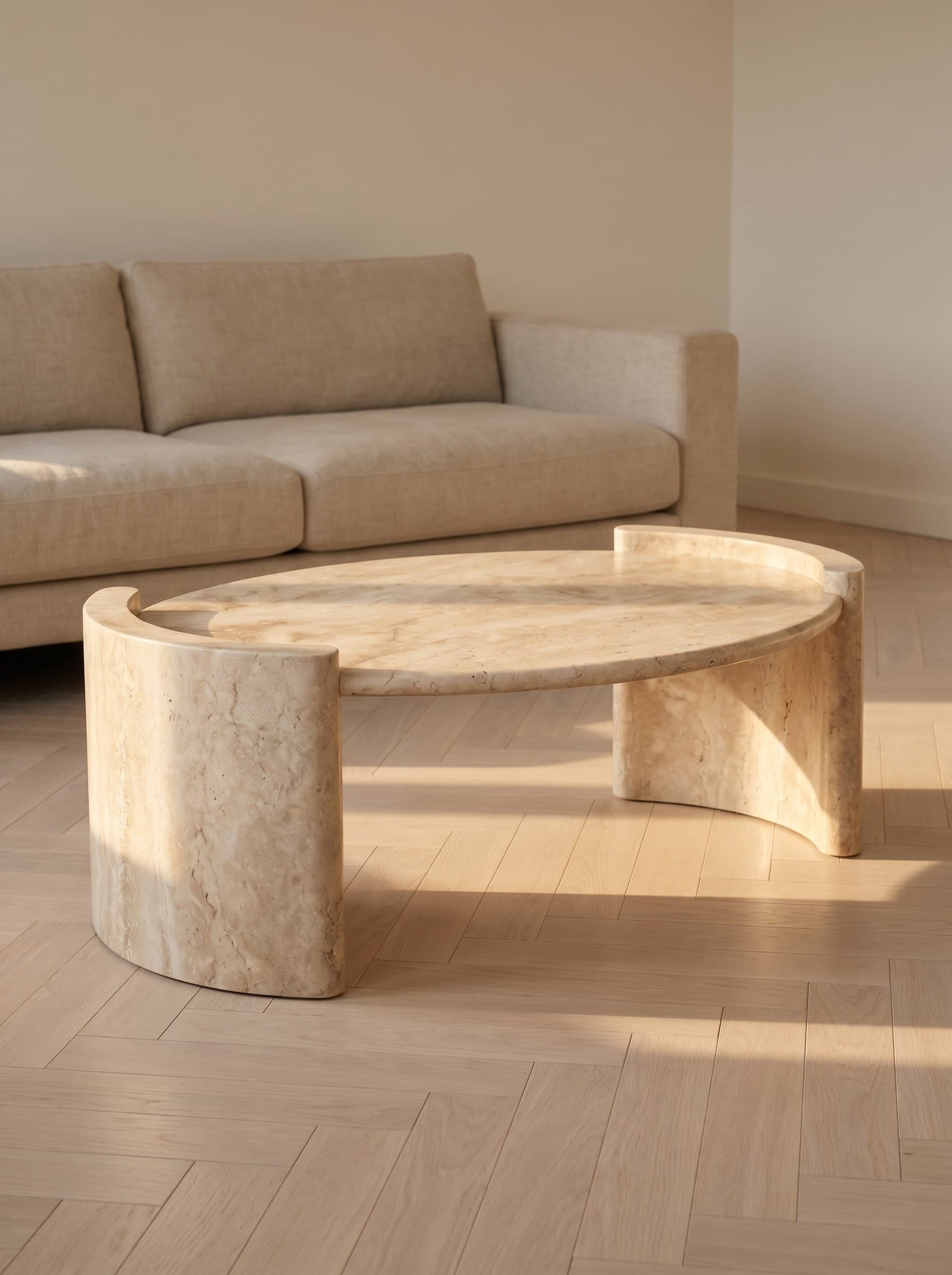
Sizes that work, round versus oval and rectangular, bases and columns, which sofa keeps it company, and the truth about weight. Everything worth deciding before you commission.
Read article →Your cart is empty.