Journal
Travertine pros and cons
·The Pietra team
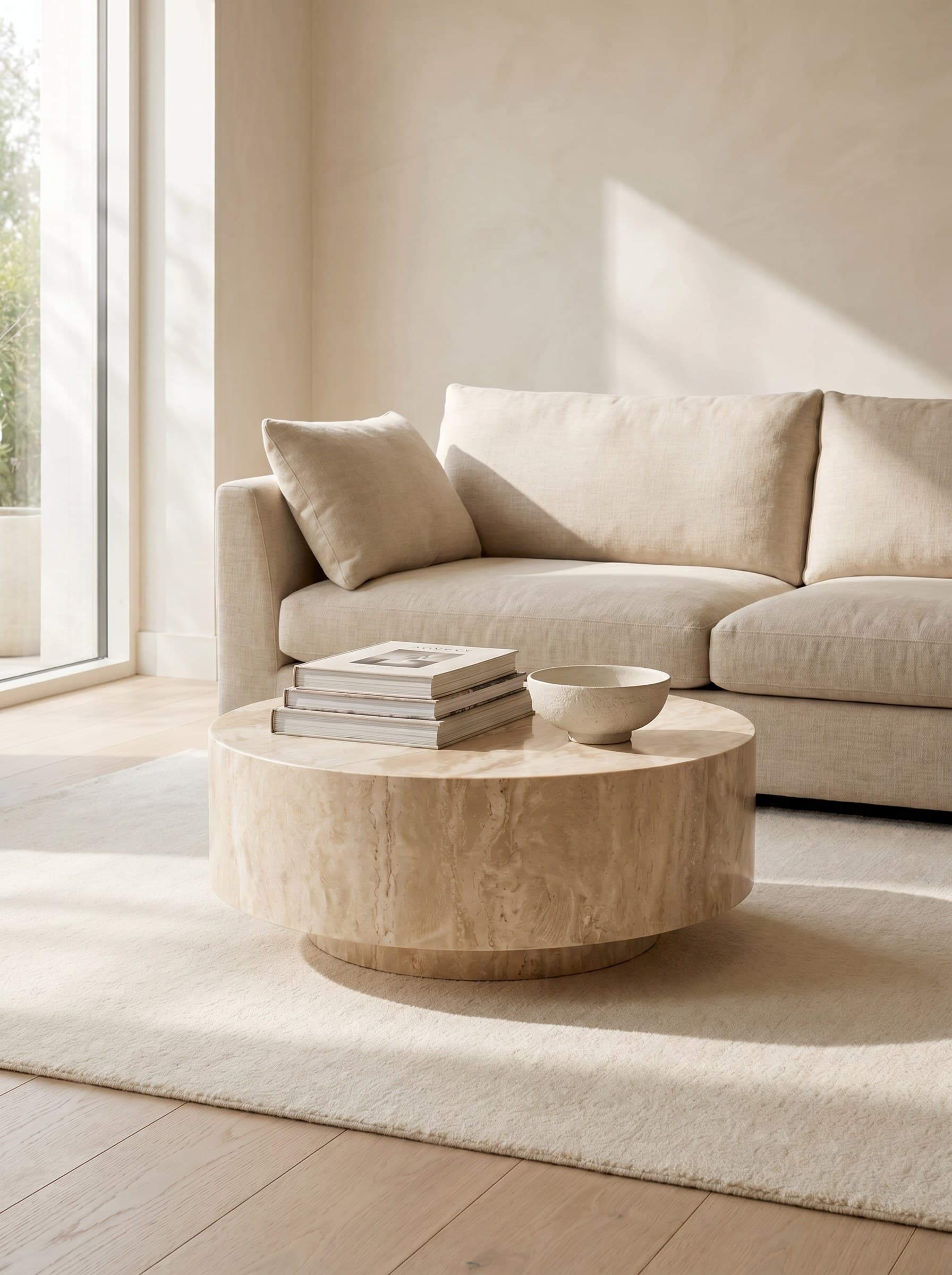
Travertine is durable. Roman aqueducts still stand after two thousand years, and they are built from this same stone. Its main advantage is longevity. Its main drawback is porosity: travertine absorbs liquids, so it must be sealed to withstand daily use.
That is the essential idea. The rest of this article unpacks the real pros and cons of the stone, with concrete data on hardness, staining, heat, and care, so you can decide with confidence.
Pros and cons at a glance
We begin with the summary. The table below weighs the strengths of travertine against its demands, without embellishment.
| Pros | Cons |
|---|---|
| Lasts for centuries with proper care | Porous: needs periodic sealing |
| Every piece is unique, no two veins alike | Sensitive to acids (wine, lemon, vinegar) |
| Warm to the touch and timeless in look | Softer than granite or quartz |
| Can be repolished and restored | Heavier, requires expert handling |
| Natural material, not synthetic | Deep stains are hard to reverse |
Is travertine durable?
Yes. Travertine is a limestone formed over thousands of years, and with proper care it lasts for generations. The proof is Roman architecture, which has survived the elements for two millennia.
On the Mohs scale, travertine rates around 3 to 4. It is softer than granite (6 to 7), so it is not the most scratch-resistant stone, yet its structural strength is immense. The key distinction: surface hardness is not the same as longevity. A travertine table can stay with you for a lifetime and improve over time, gaining a quiet patina that synthetic material never achieves. To understand its origin better, read what is travertine.
Does it scratch or stain?
It can scratch and it can stain, but both risks are manageable. As a stone of medium hardness, travertine marks against harder objects, such as ceramics with a rough base or dragged metal. Light marks are often hidden by the natural texture of the stone.
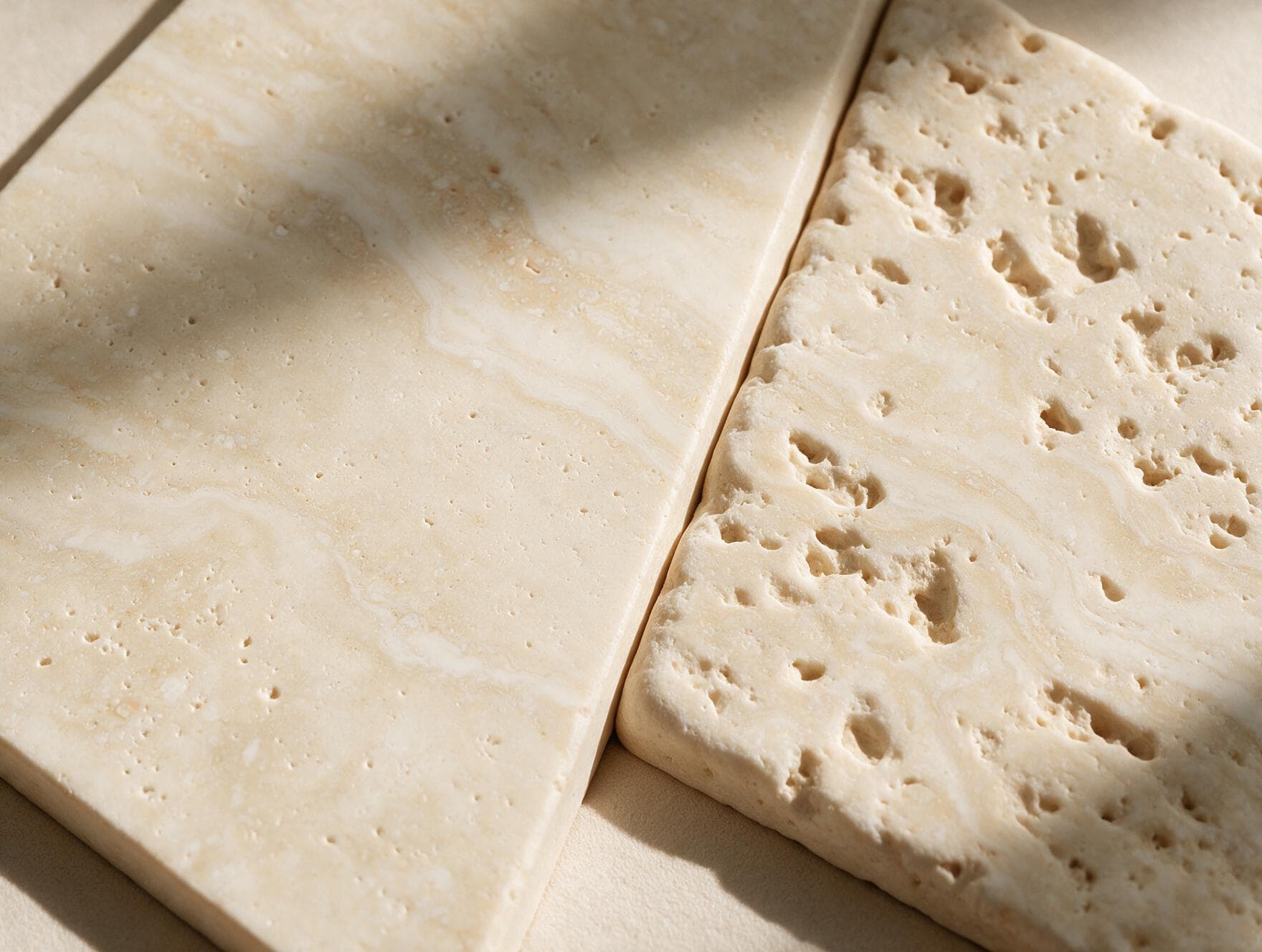
Staining is the more important matter. Because it is porous, unsealed travertine absorbs liquids: oil, wine, coffee. It is also sensitive to acids, which cause what is known as etching, a dull mark where the acid has reacted with the limestone. That is why we recommend sealing and wiping spills at once. We set out the method in how to clean and seal travertine.
Does it handle heat?
Travertine is natural stone and does not burn or warp under moderate heat. It tolerates temperature far better than most synthetic surfaces. Even so, sudden temperature changes and direct contact with very hot vessels can damage the sealer or, over time, the stone itself.
The guidance is simple: use coasters and trivets. Not out of fragility, but out of respect for a surface that will last for decades.
How the cons are managed
The disadvantages of travertine are manageable, and most are resolved at the source and with minimal upkeep.
- Sealing. A penetrating sealer closes the pores and creates a barrier against liquids. We recommend resealing every 12 to 18 months, depending on use.
- Finish. A honed and filled finish closes the natural voids and gives a more uniform surface that is easier to care for.
- Made to order. Every piece is hand-carved to order, sealed and ready to live with, with clear care instructions from day one.
- Daily cleaning. Soft cloth, warm water, and a pH-neutral soap. No acidic or abrasive products.
Who it is and is not for
Travertine is for those who want a natural, timeless piece with character, and who accept calm upkeep in exchange for a surface that ages with grace. It is ideal for coffee tables, consoles, and sideboards in homes that value material over fashion.
It is not the best choice for someone who wants a zero-maintenance surface, indifferent to acids and sealing. If that is you, it is worth knowing in advance. But if the idea of a living stone appeals to you, our travertine coffee tables are a fine place to start.
In short: travertine is durable and beautiful, and its drawbacks are managed with sealing and simple care. Explore the material in our travertine hub, or let us talk about a custom-made piece, hand-carved for your space.
Frequently asked questions
What are the disadvantages of travertine?
The main disadvantages of travertine are its porosity, which calls for sealing every 12 to 18 months, and its sensitivity to acids, which can etch the surface. It is also softer than granite (Mohs 3–4) and heavier, so it requires expert handling.
Does travertine scratch easily?
It can scratch, since its hardness is medium (Mohs 3–4) and it is softer than granite or quartz. Even so, light marks are often hidden by the natural texture of the stone, and a honed and filled finish improves its resistance.
Does travertine stain?
Unsealed, travertine is porous and absorbs liquids such as oil, wine, or coffee. Sealed, and with spills wiped at once, the risk of staining drops sharply. It is wise to avoid acids such as lemon or vinegar, which can etch the surface.
Is travertine durable?
Yes. Travertine lasts for generations with proper care. Roman aqueducts, built from this stone, still stand after two thousand years. It can also be repolished and restored, so a single piece can stay with you for a lifetime.
How often should travertine be sealed?
We recommend resealing travertine every 12 to 18 months, depending on how the piece is used. A penetrating sealer closes the pores and creates a barrier against liquids. Daily cleaning with a soft cloth and pH-neutral soap extends its effect.
The collection
The stone, in person
Every piece is hand-carved to order, with the unique veining of its block. Start with the coffee tables.