Journal
Types of travertine: colours, origin and finishes
·The Pietra team
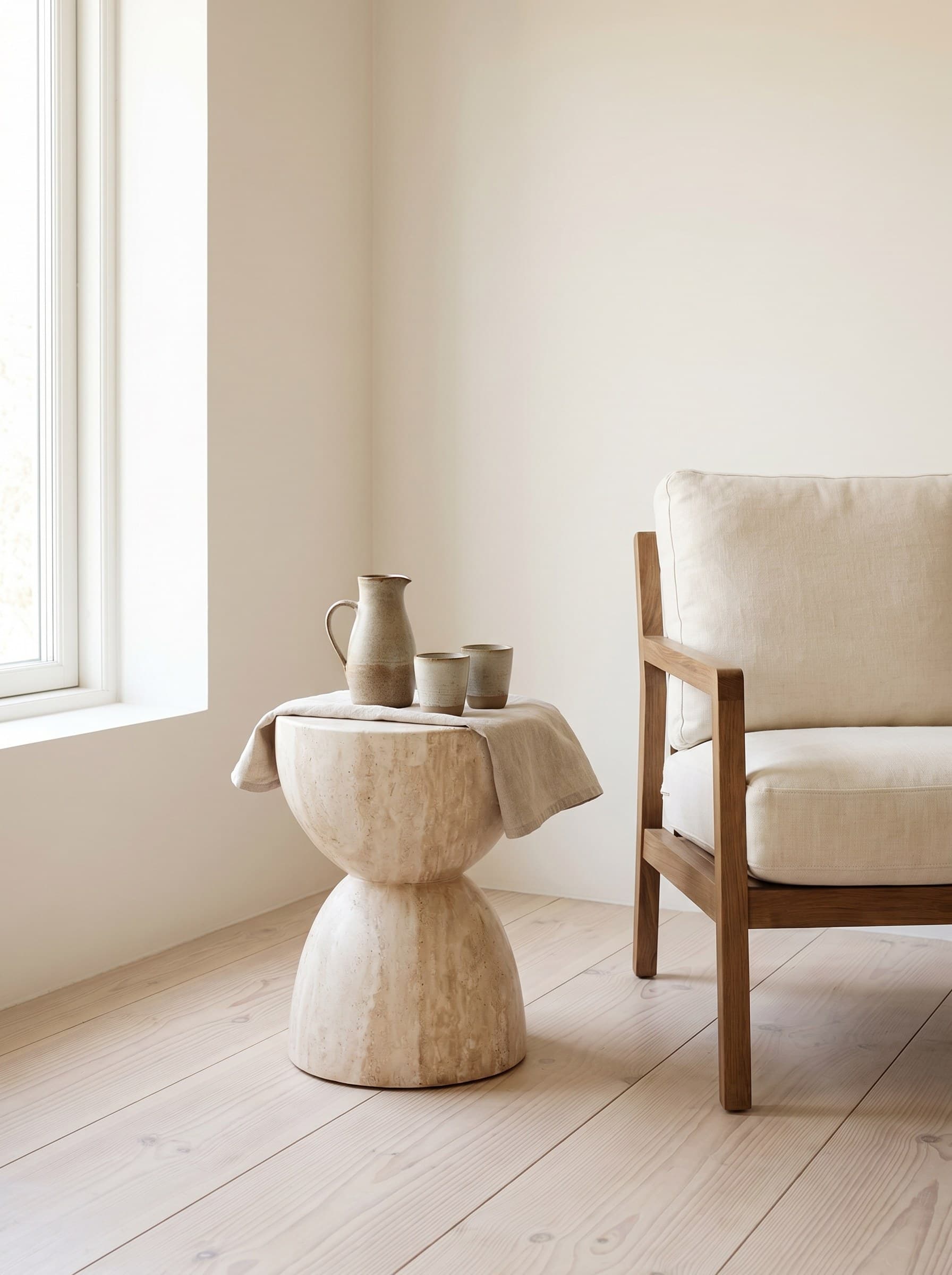
Travertine is classified in two ways: by colour and origin (Roman or classic, Navona, silver, walnut, red and the rare white) and by finish (filled or unfilled, honed, polished or tumbled). The two dimensions are independent: the same tone can be ordered in several finishes, and that combination decides how the stone looks and how it lives.
Every travertine shares the same geological root. It is a sedimentary rock formed near hot springs, layer upon layer of calcite, with the characteristic pores that give away its origin. What changes between varieties is the iron oxide and the minerals the water carried over thousands of years: that chemistry sets the colour. For the full background, see what is travertine.
Types by colour and origin
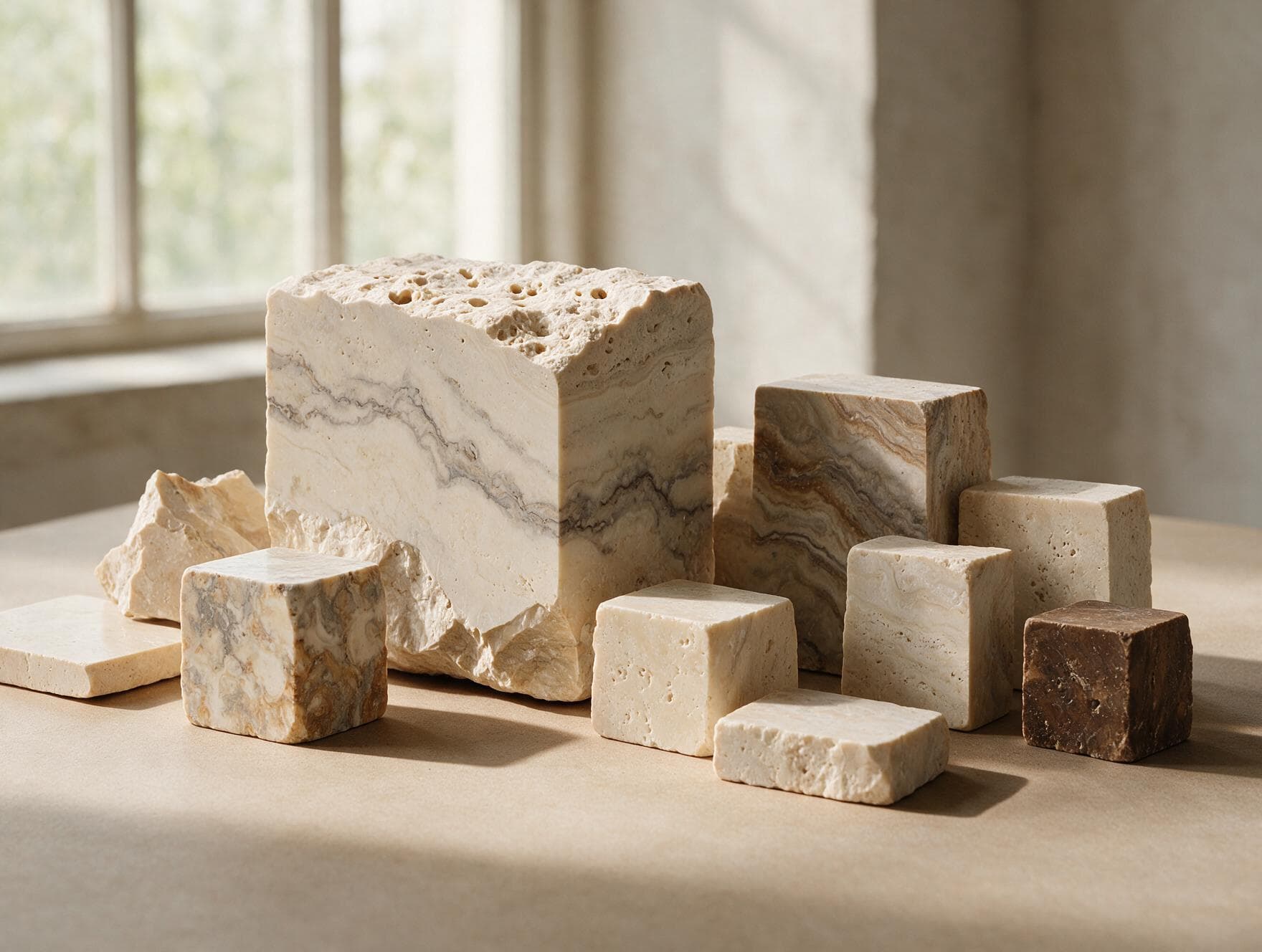
The commercial family of travertine is sorted mainly by tone. These are the types most often used in furniture, from lightest to darkest.
| Type | Colour | Look and use |
|---|---|---|
| Roman / Classic | Beige cream | The best known. Warm and neutral, soft horizontal veining. A safe base for tables and consoles. |
| Navona | Warm beige, banded | Bold veining in pale, golden bands. Plenty of movement; it makes a piece the protagonist. |
| Silver | Grey | Cool, silvery greys with linear veining. A contemporary look that suits restrained interiors. |
| Noce / Walnut | Brown | Walnut and chocolate tones. Warm and enveloping, ideal for darker or timber-led rooms. |
| Rojo / Red | Reddish | The colour of iron oxide. Rare and intense, almost sculptural; it asks for little competition. |
| Blanco / White | Very pale ivory | The least common and most delicate. Almost luminous, and more demanding in block selection. |
Finishes: filled vs unfilled, honed vs polished vs tumbled
The finish decides the final texture and, above all, how the surface behaves day to day. It helps to separate two questions: what is done with the pores, and how the face of the stone is treated.
Filled closes the natural pores with mineral filler in a matching tone. The result is a continuous, practical surface that is easy to clean. Unfilled leaves the pores visible: more textural and honest, more beautiful up close, but more demanding, as it traps dust and liquids. For tables in daily use we usually recommend filled.
On the face of the stone there are three treatments. Honed is an even, soft matte with no shine: it is our default finish and the one that best suits furniture, because it hides marks of use and brings out the colour without glare. Polished gives a mirror shine: striking but cold, it shows fingerprints and etching more, and rarely matches the warm character of travertine. Tumbled is an aged finish with softened edges and an antique feel, made more for floors and rustic cladding than for a fine table.
Which type to choose for furniture
For a table used every day, the safest combination is Roman or Navona travertine, filled and honed. It joins warmth, visible texture and a practical surface that forgives real use. Roman blends in effortlessly; Navona, with its banding, turns the piece into the centre of the room.
If you want a cooler, more contemporary tone, silver works very well with neutral interiors. For warm or timber-led rooms, walnut adds depth. Red and white are choices of character: beautiful, but meant for those who want a clearly singular piece. You can see how these tones translate into real pieces across our coffee tables and the travertine collection.
How we work it in the atelier
Each piece starts from a hand-selected block. We choose the travertine for its veining and tone before carving, and we send photos of the real block when the project calls for it, because no two blocks are alike.
We carve by hand, fill when use advises it, and finish honed unless asked otherwise. We then seal with a penetrating sealer that protects the stone without altering its matte feel. Everything is made to order, with a lead time of 60 to 90 days and white-glove delivery across the EU. The care routines that follow are in our guide to how to clean and seal travertine.
Choosing well begins with the tone and ends with the finish. Once the character you want is clear, explore the travertine collection or ask us for a custom made piece: we select the block with you before the first cut.
Frequently asked questions
What is the best type of travertine?
There is no single best one; it depends on use. For everyday furniture, Roman or Navona travertine in a filled, honed finish is the most balanced choice for its warmth, texture and easy upkeep. Silver, walnut, red or white tones are chosen for character rather than practicality.
What is the difference between Roman and Navona travertine?
Roman or classic is an even beige cream with soft, horizontal veining, ideal as a neutral base. Navona is a warm, banded beige with bold veining in pale and golden bands and far more visual movement. Navona stands out; Roman accompanies.
Is there white travertine?
Yes, it exists, but it is the least common type. It is a very pale, almost luminous ivory travertine, more delicate and more demanding in block selection. Because it is rare, it is usually reserved for singular pieces.
What is filled travertine?
It is travertine whose natural pores are closed with a mineral filler in a matching tone, creating a continuous, smooth surface. Compared with unfilled, it is more practical and easier to clean, which is why we recommend it for tables in daily use.
Which travertine finish is best for a table?
Honed, an even matte with no shine. It hides marks of use, brings out the colour without glare and keeps the warm feel of the stone. Polished shows fingerprints more, and tumbled is meant for floors, not a fine table.
The collection
The stone, in person
Every piece is hand-carved to order, with the unique veining of its block. Start with the coffee tables.