Journal
Stone furniture trends 2026: what defines the year in interiors
·The Pietra team·Updated
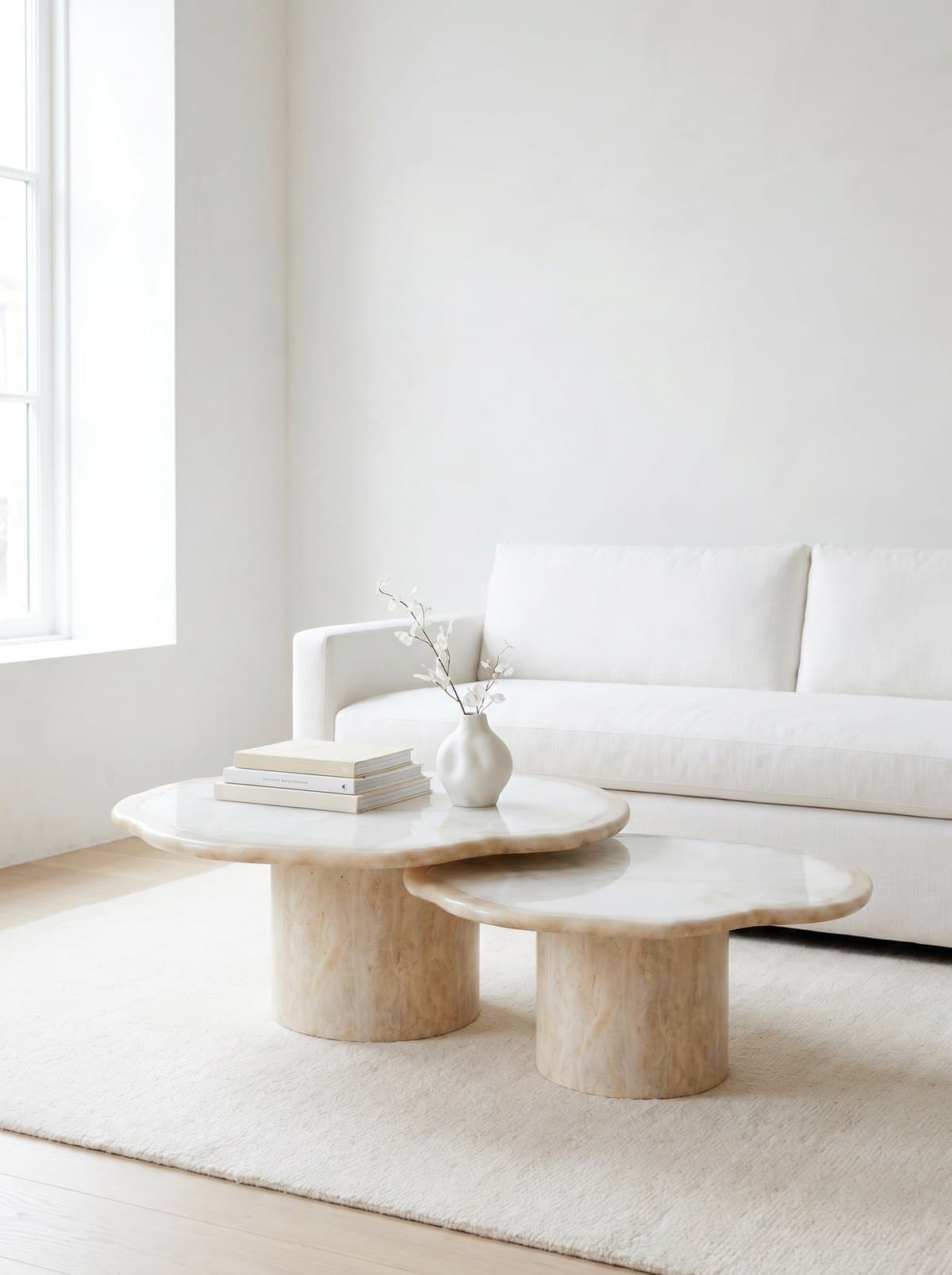
In 2026 natural stone furniture moves toward warm, sculptural pieces made to last. Stone stops being a cold accent and becomes the calm centre of the room: surfaces that are matte to the touch, hand-carved volumes, and materials that age well rather than dating. This is a shift in substance, not a whim.
Five trends define the year, and we develop each one through the article:
The five trends
A quick read before the detail. This table sums up where each trend is heading and why it has staying power beyond 2026:
| Trend | What it is | Why it lasts |
|---|---|---|
| Warm minimalism | Clear spaces with cream and walnut stone tones | Warmth does not tire the way loud design does |
| Sculptural forms | Curves, soft edges, carved bases | A good form outlives the season |
| Organic modern | Stone with wood, linen and earth tones | Natural materials that sit together without forced contrast |
| Honed finish | Matte surface over mirror polish | Matte hides wear and does not date |
| One-of-a-kind | Made-to-order furniture, never repeated | The singular never turns generic |
Warm minimalism and the return of travertine
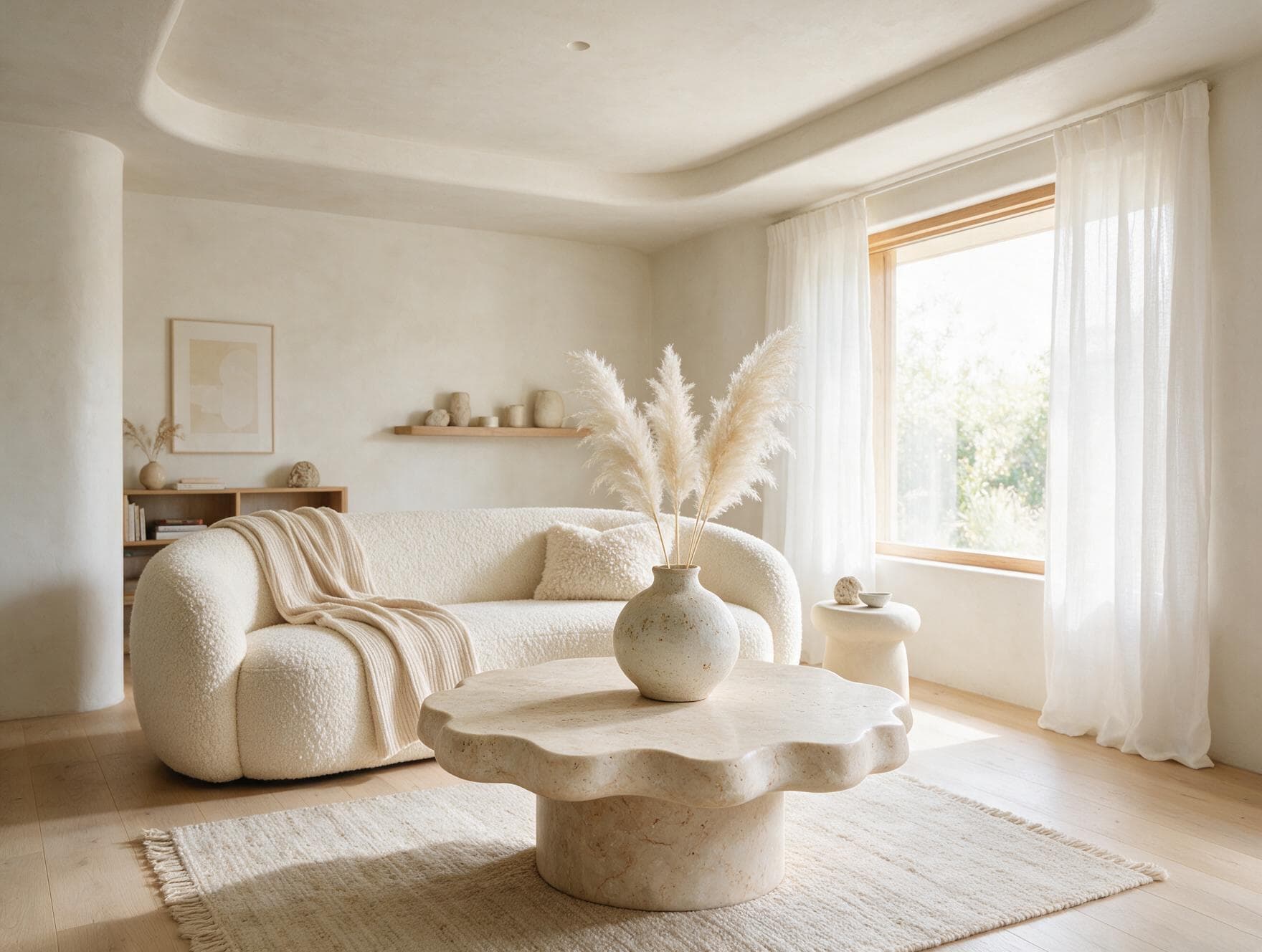
The cold minimalism of white surfaces and steel has given way to a warm minimalism. The idea is the same (few elements, clean lines, visual calm), but the material changes temperature. Travertine leads that turn: its natural pores and cream tones bring texture and warmth without resorting to ornament. A single stone piece is enough to give character to an uncluttered room.
This is not a new fashion but the revival of a material with more than two thousand years of history. That is why it holds: the warmth of travertine does not depend on any one season. To place the trend in context, it is worth reading whether travertine is outdated, a question that in 2026 has a clear answer.
Sculptural and curved forms
The second current of the year is form. Against the flat, angular piece, 2026 prefers carved volume: rounded edges, cylindrical bases, surfaces that look shaped by water. Stone stops being a tabletop and becomes useful sculpture. A coffee table with a curved base works as the centre of the room, not as a simple support.
This trend sits naturally with hand carving. Each curve is worked on the block, which gives the piece a presence that mass production cannot reach. The natural stone coffee tables are where this sculptural language reads best, at eye level and in daily use.
Honed matte over polished
For years a mirror polish was the byword for luxury in stone. In 2026 the preference leans clearly toward honed: a matte surface, soft to the touch, that reveals the colour of the stone without reflections. The reason is both practical and aesthetic. Matte hides the marks of use, avoids the cold effect of shine, and sits better in a warm, natural interior.
It is also a finish that does not date. A highly reflective polish recalls particular eras of design; matte, by contrast, stays neutral over the years. Choosing honed is, in large part, choosing a piece that will not look dated soon.
How to adopt them without dating
The paradox of following trends is that many expire. The way to avoid this is to tell passing fashion from substance. Travertine, the matte finish and sculptural carving are not seasonal novelties: they are ways of working stone that have proven their reach over centuries. Choosing them is the opposite of following a fashion.
Three criteria help in choosing well: put material before effect, prefer calm forms over flashy ones, and choose one-of-a-kind pieces over mass production. The japandi style with travertine captures this balance of calm, warmth and permanence. And to settle the underlying doubt, it is worth confirming that travertine is not outdated before investing in a piece.
One-of-a-kind and made to order
The fifth trend is, perhaps, the most lasting: the irreplaceable. Against the saturation of mass-produced furniture, 2026 values the single piece, hand carved to order. No two blocks of stone are alike, so each table carries a pattern of veins that is never repeated. That singularity is the true luxury, and it does not age.
At the atelier each piece is hand carved to order, with a lead time of 60 to 90 days and white-glove delivery across the European Union. The travertine hub gathers the collection and its varieties for anyone who wants to begin with the material that defines the year.
Frequently asked questions
What stone furniture is trending in 2026?
In 2026 the trends are travertine coffee and side tables with sculptural bases, curved forms with soft edges, and honed matte finishes. Warm minimalism and the one-of-a-kind hand-carved piece dominate over mass-produced furniture.
Is travertine still on trend in 2026?
Yes. Travertine is one of the leading materials of 2026, driven by warm minimalism and the organic modern style. Far from dating, it recovers the prestige of a material with more than two thousand years of history.
What is organic modern style?
Organic modern combines the clarity of contemporary design with natural materials and organic forms. In practice it means bringing together natural stone, wood, linen and earth tones in uncluttered yet warm spaces.
Polished or honed in 2026?
In 2026 the trend leans clearly toward honed, a matte finish that is soft to the touch. It hides the marks of use better, avoids the cold effect of shine, and integrates into warm interiors. Matte also does not date and ages better.
How to choose stone pieces that will not date?
It helps to put material before effect, to choose calm forms rather than flashy ones, and to prefer one-of-a-kind pieces over mass production. Travertine, the matte finish and sculptural carving have proven their reach over centuries, so they do not expire with the season.
The collection
The stone, in person
Every piece is hand-carved to order, with the unique veining of its block. Start with the coffee tables.