
Journal
Travertine japandi style: warm minimalism at home
·The Pietra team
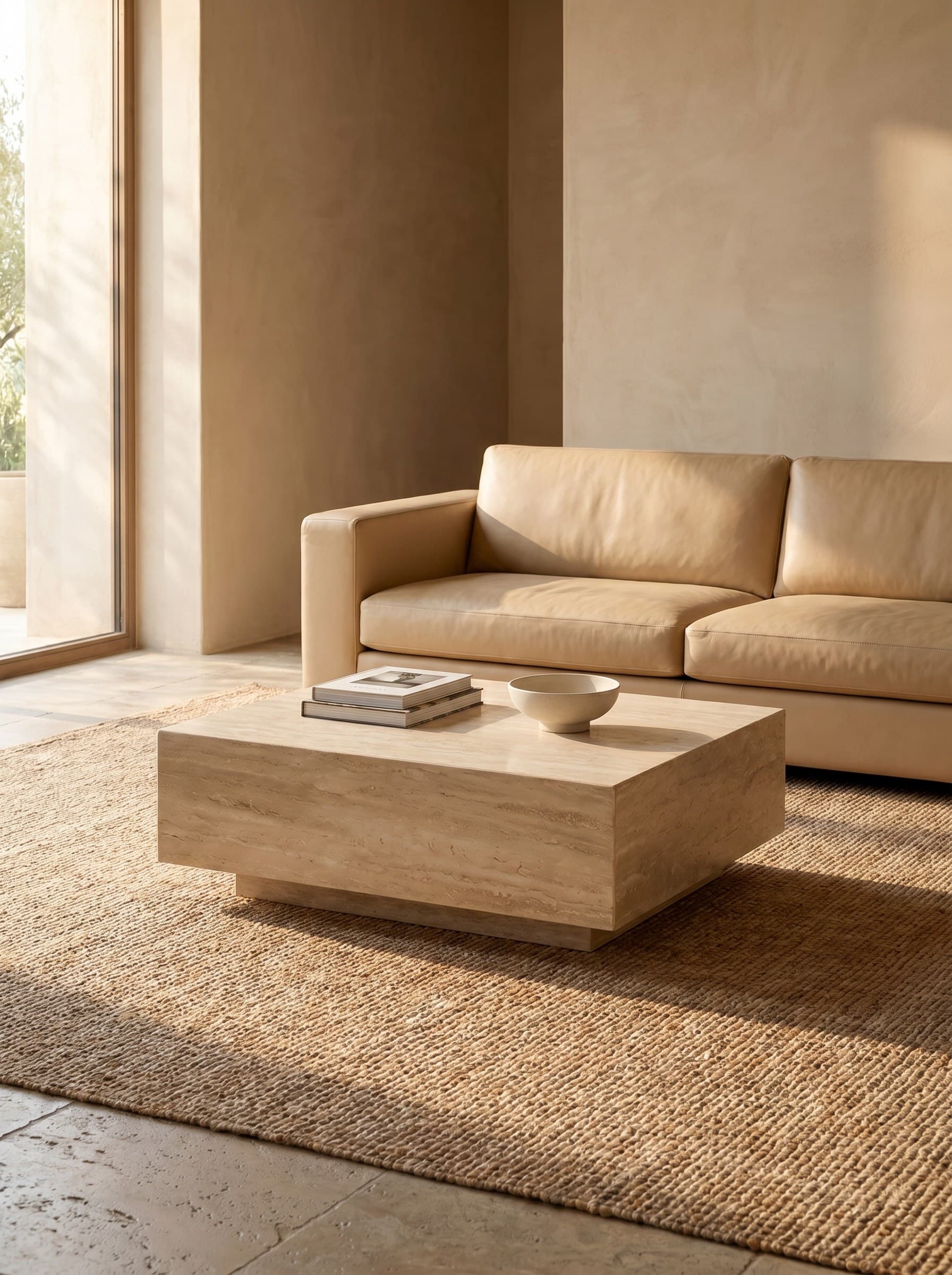
Travertine fits japandi style because it unites Japanese warmth and Scandinavian restraint through one thing: natural, tactile material. Japandi seeks calm rooms built from a few honest elements, and stone answers with its porous texture, its warm tone and its variation that never repeats. Where cold minimalism feels clinical, travertine brings soul without breaking the calm.
At Pietra by Bianca every piece is hand-carved to order. No two are alike. That singularity is exactly what japandi celebrates: the beauty of the natural, of what is made slowly and by hand.
What japandi is
Japandi grows from the meeting of two kindred philosophies. From Japan comes wabi-sabi: the acceptance of the imperfect, the natural and what ages with dignity. From Scandinavia comes hygge: warm comfort, soft light and a simple way of living.
The result is an interior of clean lines, a neutral palette and noble materials. Fewer objects, better chosen. Stone, wood, linen and ceramic live together in earthy, muted tones. Nothing shouts. Everything breathes.
Why travertine fits
Travertine carries the qualities japandi asks for. Its tone is warm, between cream and sand, far from the cold white of polished marble. Its porous texture invites touch and catches light gently. And its natural veining, different in every block, embodies the wabi-sabi idea of imperfection as beauty.
It is a stone that ages well and does not go out of fashion. If you wonder whether it still belongs, we examined that question in this article. Within a japandi scheme, travertine works as a warm anchor: it gives visual weight without clutter and converses with pale wood and natural textiles.
How to bring it in: palette and materials
The key is to surround travertine with materials just as honest and to keep a matte finish. Avoid high gloss and hard contrast. This is the pairing that works best in a japandi living room.
| Element | Pair with | Avoid |
|---|---|---|
| Travertine (honed, matte) | Pale oak, linen, boucle | High-gloss marble |
| Colour palette | Cream, sand, greige, soft terracotta | Cold pure white |
| Accents | Matte black, aged brass | Bright chrome |
| Walls and floor | Lime plaster, natural wood | High-gloss lacquer |
| Textiles | Washed linen, wool, boucle | Satin synthetics |
Key pieces for a japandi living room
You do not need much. Two or three well-chosen stone pieces hold the whole mood.
- A low, honed coffee table with soft lines and a rounded volume, as the centre of the room.
- A sculptural side table beside the sofa or the armchair, to add rhythm without crowding.
- A pale wood base or a sofa in a natural tone that lets the stone breathe.
- Warm, indirect lighting that brings out the texture of travertine as evening falls.
Mistakes to avoid
- Mixing travertine with high-gloss marble or chrome: it breaks the matte calm of japandi.
- Crowding the space. Japandi is restraint; leave emptiness around each piece.
- Choosing cold tones. Look for creams and sands, not bluish greys.
- Forgetting scale. A table that is too small loses the sculptural presence of the stone.
Travertine is perhaps the stone that best translates the japandi spirit: warm, serene and deeply natural. Explore our travertine collection in the travertine catalogue, discover the coffee tables or design your own piece made to order. Each one is hand-carved for you.
Frequently asked questions
Does travertine fit japandi style?
Yes. Travertine is one of the stones that best translates japandi, because it unites Japanese warmth and Scandinavian restraint through its natural texture, warm tone and unrepeatable veining. It adds soul without breaking the minimalist calm.
What stone is best for a japandi living room?
Honed travertine is the best choice. Its matte finish and its tone between cream and sand suit the neutral japandi palette better than high-gloss marble, which brings a shine that feels too cold for this style.
What colours go with travertine?
Travertine pairs with creams, sands, greige and soft terracotta. In a japandi scheme it works alongside natural, muted tones, with accents in matte black or aged brass. Avoid cold pure white and bluish greys.
What materials pair with travertine in japandi?
Pale oak and natural woods, washed linen, wool, boucle and lime plaster. All share an honest, matte character. Avoid bright chrome, satin synthetics and high-gloss lacquer.
How do you style a travertine coffee table?
Keep it restrained. A few objects in natural tones, a book, a ceramic piece and perhaps a single branch. Leave empty surface so the stone can breathe and its texture stays the focus of the room.
The collection
The stone, in person
Every piece is hand-carved to order, with the unique veining of its block. Start with the coffee tables.