Journal
How to clean a marble table without damaging it
·The Pietra team
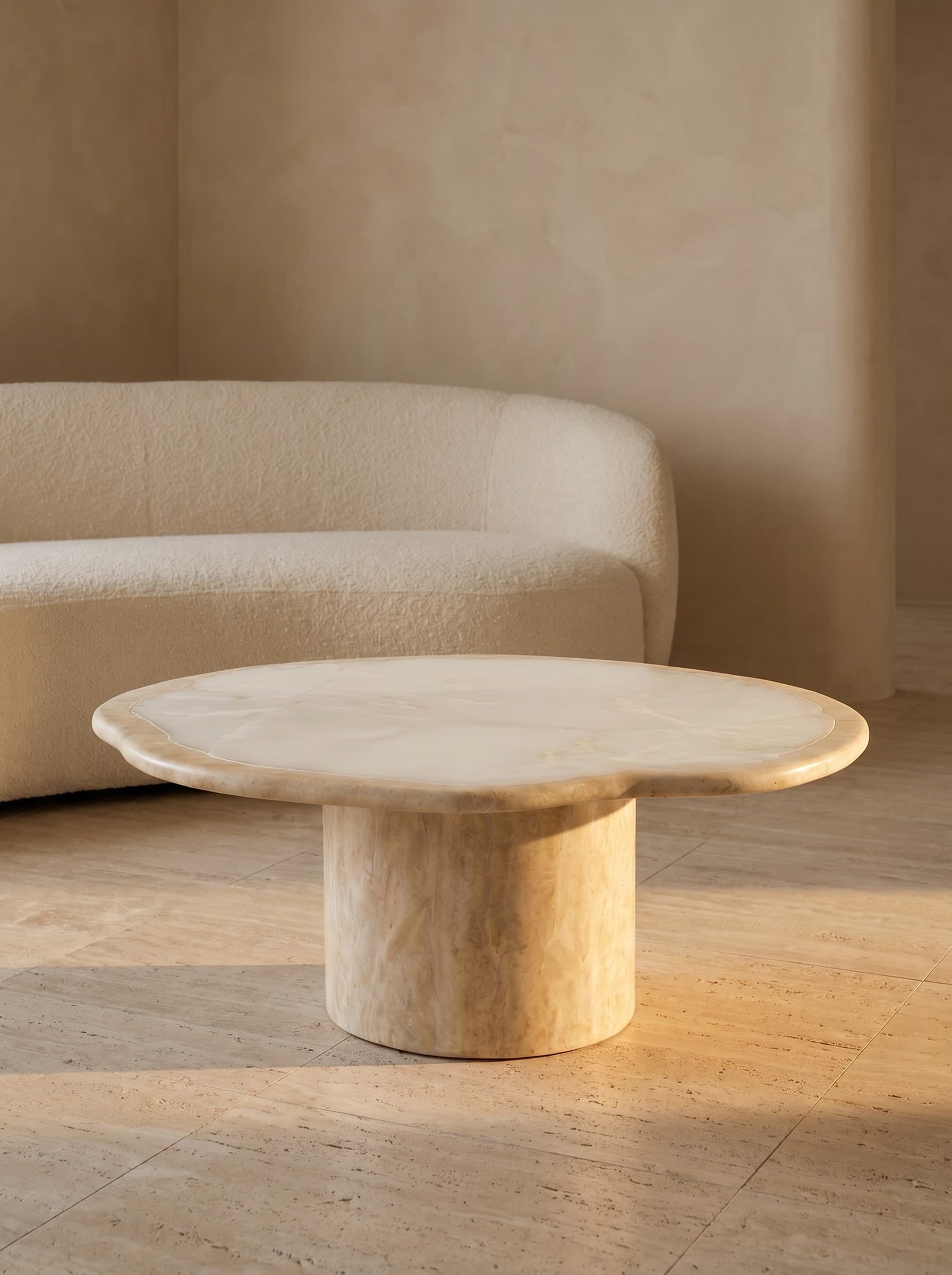
To clean a marble table day to day, all you need is pH-neutral soap diluted in warm water and a soft microfibre cloth. Wipe gently, rinse with clean water and dry at once with a separate dry cloth to avoid water rings. The golden rule is simple: never use acids such as lemon, vinegar or limescale removers, seal the stone periodically, and blot spills the moment they happen rather than letting them sit.
Marble is a noble stone, but it is calcareous, and it reacts to acids. Caring for it is not difficult; it only asks for consistency and a few correct habits. Below you will find the daily routine, what to avoid, a quick reference table for stains and etching, the sealing cadence, and how its care differs from travertine.
Daily routine
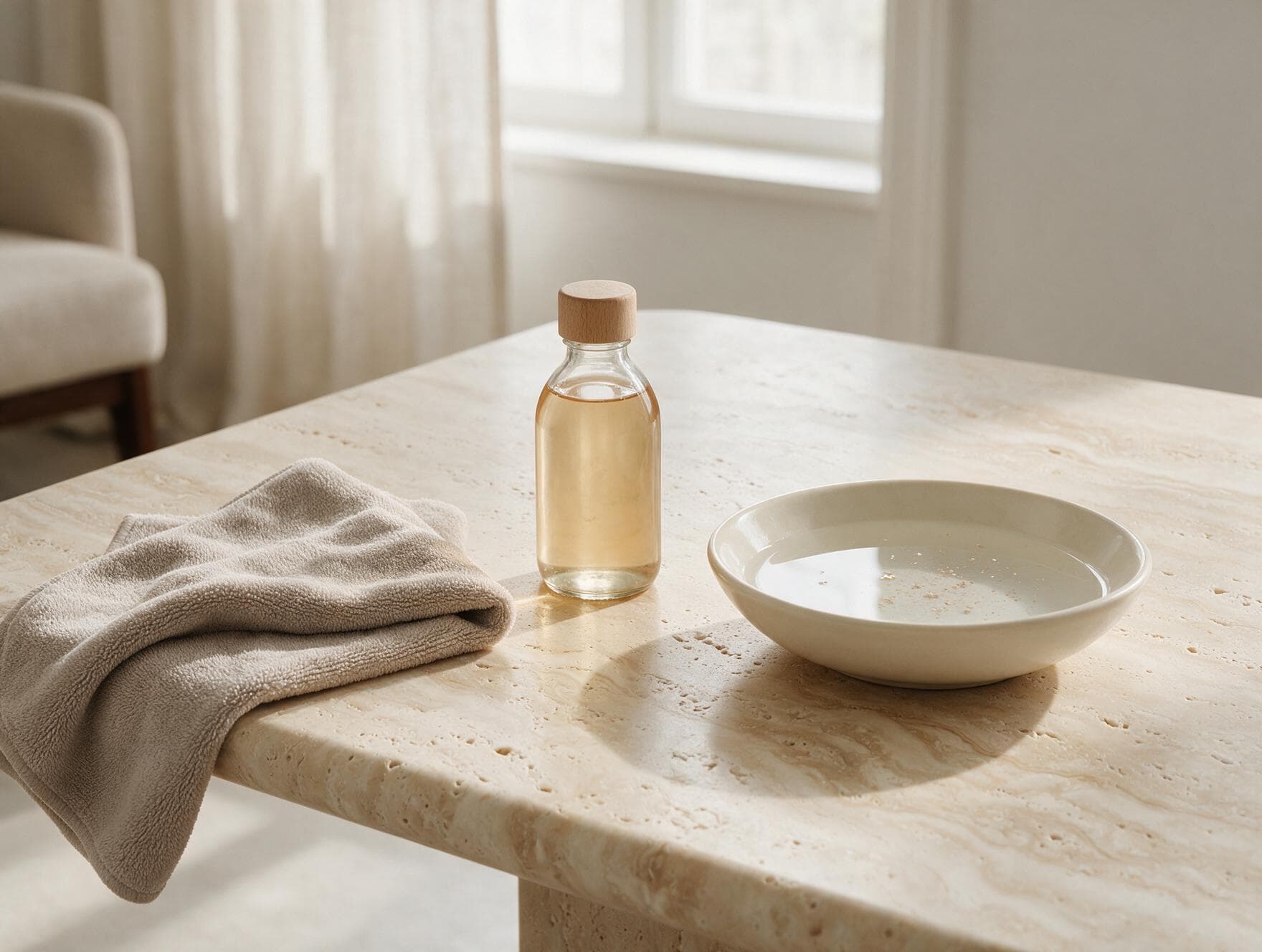
Everyday marble care comes down to four small gestures. Done daily, they keep the surface protected and luminous for years:
- 1.Remove dust and crumbs with a dry microfibre cloth or a soft duster, without dragging particles that could scratch the surface.
- 2.Mix warm water with a few drops of pH-neutral soap. Avoid any all-purpose cleaner unless you have confirmed it is safe for natural stone.
- 3.Wipe the whole surface with the damp, well-wrung cloth, using gentle movements and without scrubbing.
- 4.Rinse with a second cloth barely dampened in clean water, then dry immediately with a third dry cloth so no water rings or soap residue remain.
What to avoid on marble
Most damage to a marble table comes not from use but from the wrong products. Marble is sensitive to acid, and contact with certain substances leaves a mark that is hard to reverse.
The main enemy is acidity. Lemon juice, vinegar, wine, soft drinks and many household cleaners dissolve a microscopic layer of the polished surface. The result is etching: a dull, usually lighter mark that is not dirt but an alteration of the stone’s shine itself. That is why it does not vanish when you scrub it with soap.
- Acids: lemon, vinegar, wine, tomato, coffee and limescale or descaling products. They are the number one cause of etching.
- Abrasives: scouring powders, metal pads and rough sponges, which scratch the polish permanently.
- Bleach and ammonia: harsh on the sealer and on the finish, and poorly suited to natural stone.
- Heat and standing water: always use coasters and placemats, and never leave glasses or vases sweating on the surface.
Stains and etching at a glance
Not every mark is treated the same way. It helps to tell a stain, which sinks into the pore, from etching, which alters the shine. This table sums up the most common situations:
| Issue | Solution |
|---|---|
| Oil stain | Apply a paste of baking soda and water, leave it for a few hours, remove and rinse. Oil is a greasy stain that lifts with an absorbent poultice. |
| Wine or coffee | Blot at once without rubbing. If a ring remains, use neutral soap or an absorbent paste; the sooner you act, the better. |
| Acid etching | It is not dirt but lost shine. Light marks improve with a marble-specific polish; deep ones need professional refinishing. |
| Water ring | Usually superficial. Dry the area well; if it lingers, go over it with a microfibre cloth and let it air-dry completely. |
Sealing marble
A penetrating sealer does not change how the stone looks: it sinks into the pore and buys you a few minutes to wipe up a spill before it soaks in. It does not make marble indestructible, but it greatly reduces the risk of staining in daily use.
The cadence depends on use and finish. As a guide, a dining table or a high-traffic console benefits from yearly sealing; lightly used pieces can stretch to every two years. A simple test: pour a few drops of water on the surface. If they bead up, the sealer is still working; if the stone darkens and the water is absorbed, it is time to seal again.
Marble vs travertine in care
Marble and travertine share a mineral family and therefore almost all of their care: both are calcareous, both fear acids, and both benefit from neutral soap and periodic sealing. The difference lies in the pore. Travertine is naturally more porous and, depending on the finish, may ask for slightly more frequent sealing and attention to its small cavities.
If your piece is travertine, or combines both stones, see our guide to cleaning and sealing travertine. And if you are choosing between marble varieties before you commit, our overview of types of marble will help.
A well-cared-for marble table gains character over the years: use settles it without taking away its nobility. Every atelier piece is hand-carved to order, with lead times of 60 to 90 days and white-glove delivery across Europe. Explore our marble consoles or let us talk about a custom-made piece shaped for your space.
Frequently asked questions
How do you clean a marble table daily?
Use pH-neutral soap diluted in warm water and a soft microfibre cloth. Wipe with the well-wrung cloth, rinse with clean water and dry at once to avoid rings. Avoid any acidic or abrasive product.
What products should you avoid on marble?
Never use acids such as lemon, vinegar, wine or limescale removers, nor abrasives like scouring powders and metal pads. Avoid bleach and ammonia too. All of them etch or scratch the polished surface.
How do you remove etching from marble?
Etching is not dirt but shine lost through contact with an acid, so it does not come off with soap. Light marks improve with a marble-specific polish; deep ones require professional refinishing.
How often should you seal a marble table?
As a guide, once a year for high-use pieces and every two years for lightly used ones. Test it by pouring a few drops of water: if they bead up, the sealer is still working; if the stone darkens, it is time to seal again.
Does marble stain easily?
Unsealed, marble is porous and absorbs liquids. Sealed, and with spills blotted immediately, the risk is low. What affects it most is not staining but acid etching, which you should always avoid.
The collection
The stone, in person
Every piece is hand-carved to order, with the unique veining of its block. Start with the coffee tables.