Journal
Calacatta vs Carrara: the difference between the two white marbles
·The Pietra team
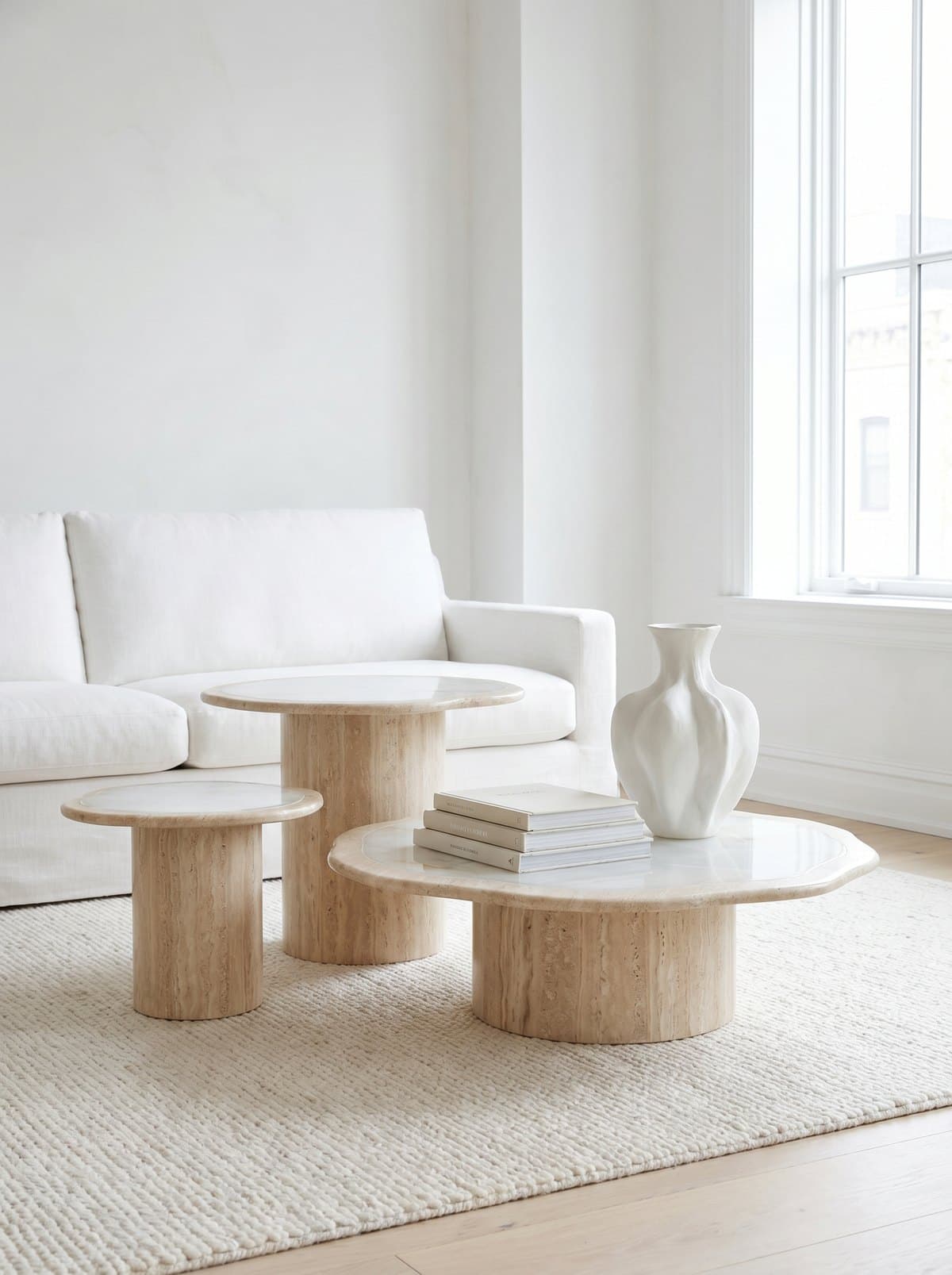
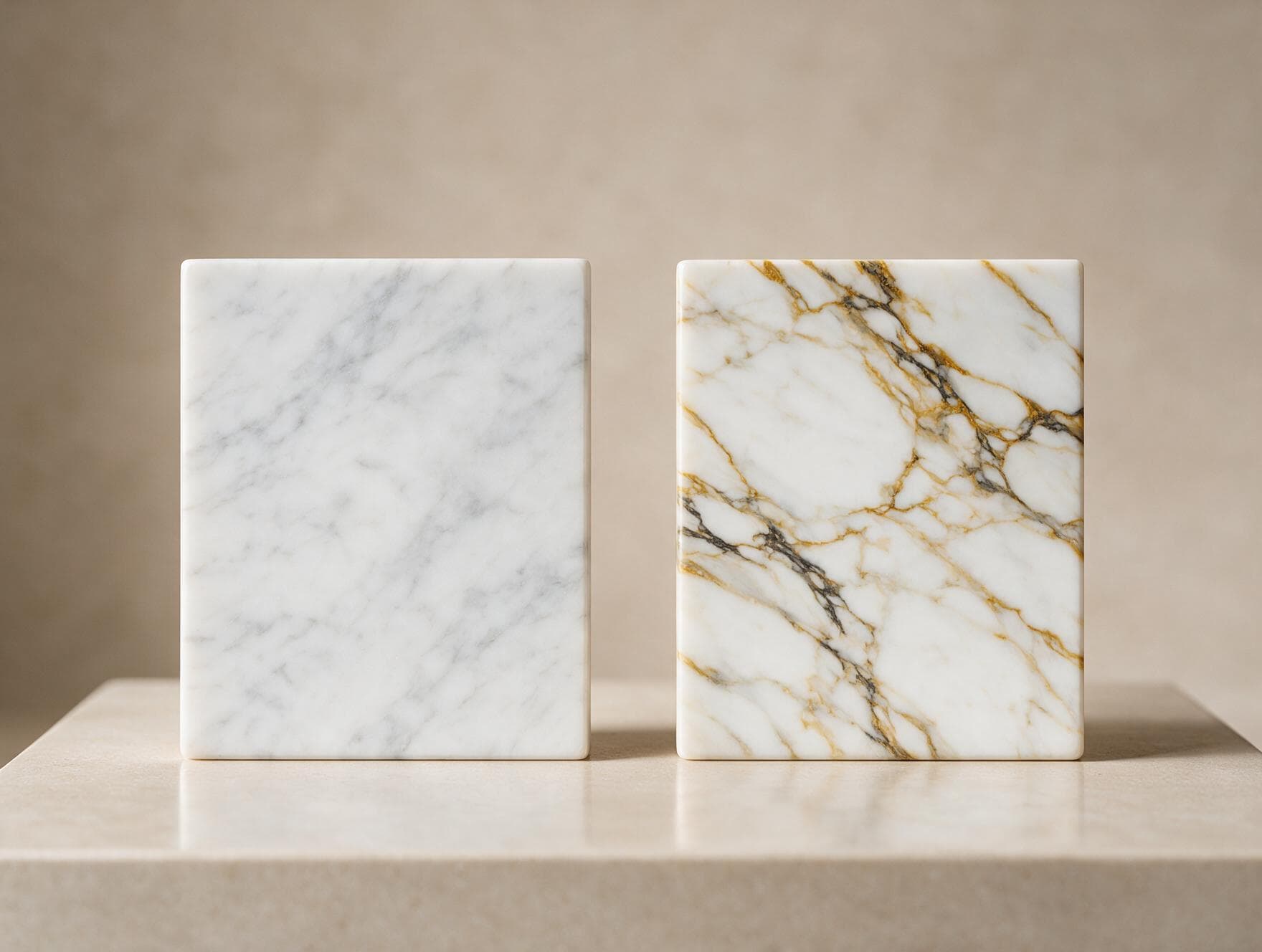
Calacatta and Carrara are the two best known white marbles of Italy, and both come from the same mountains in the Apuan Alps, near the town of Carrara. The difference is in the look. Carrara has a soft greyish white ground with fine, feathery grey veining scattered across the surface. It is abundant, and therefore more affordable. Calacatta starts from a whiter, cleaner ground crossed by wider, more dramatic and often golden veins. It is far rarer, and it costs more.
Put simply: Carrara whispers and Calacatta speaks. Neither is better than the other. They are two languages for the same stone.
Calacatta vs Carrara at a glance
This table holds the decision. The rest is a matter of nuance, and nuance matters when a piece is carved by hand and stays in a home for decades.
| Attribute | Carrara | Calacatta |
|---|---|---|
| Background | Soft greyish white | Cleaner, brighter white |
| Veining | Grey, fine and feathery, widely spread | Wide and bold, often golden |
| Rarity | Abundant | Scarce |
| Price | More accessible | Higher |
| Character | Calm and quiet | Bold and sculptural |
Carrara
Carrara is the marble most people picture when they think of white marble. Its ground runs from white to pearl grey, and the grey veining is spread fairly evenly, without strong contrast. The effect is calm. A Carrara table does not compete with the rest of the room; it keeps it company.
Because it is more abundant, Carrara makes large pieces possible without the cost rising sharply. It is the natural choice when you want the warmth of real marble with a restrained character, and when you would rather the shape of the piece, not the stone, lead the eye. Each block is still unique: no two Carrara tops are identical, because the veining is born from the way the mountain formed over millions of years.
Calacatta (and Calacatta Viola)
Calacatta comes from only a few specific quarries, and that explains its rarity. The ground is whiter, and the veining is the protagonist: wide, defined strokes that cross the surface in grey and gold. A single piece of Calacatta can order an entire room. It deserves to be treated almost as a work of art, and to be given space to breathe.
Calacatta Viola is the rarest and most sought after member of the family. Over a pale ground appear veins of deep violet, plum and burgundy, sometimes with golden flashes. It is theatrical and uncommon, reserved for pieces meant to be the centre of a room. Our Viola table is born from this very marble. Because it is so singular, each block of Calacatta is selected with a specific piece in mind: the direction of the veining stops being a technical detail and becomes a design decision.
Which to choose
The choice depends on the role you want the stone to play. If you are after serenity, a surface that brings marble without shouting, Carrara is the answer. If you want a piece that becomes the focal point, with veins that draw their own path, Calacatta, and especially Calacatta Viola, is the way.
The piece itself matters too. On a large dining table, the quiet veining of Carrara ages gracefully and never tires the eye. On a coffee table or a console, where the surface is read up close, the drama of Calacatta is fully justified. If you would like to explore the different varieties before deciding, our guide to types of marble walks through the options calmly. And once your direction is clear, we can carve the piece to order in the marble you choose.
Each piece is hand carved to order, with a lead time of 60 to 90 days, and delivered with white-glove service across Europe. Tell us what you have in mind, and we will help you choose between Carrara and Calacatta for your project.
Frequently asked questions
What is the difference between Calacatta and Carrara?
Both are Italian white marbles from the Carrara area. Carrara has a greyish white ground with fine, feathery grey veining spread widely across the surface. Calacatta starts from a whiter ground with wider, bolder and often golden veins. Carrara is calmer, and Calacatta is more dramatic.
Which is more expensive, Calacatta or Carrara?
Calacatta is more expensive. It comes from only a few quarries and is far scarcer, so it costs more than Carrara, which is abundant and more accessible. Calacatta Viola is the most expensive member of the family.
Which is better for a table?
It depends on the table. For a large dining table, the quiet veining of Carrara ages gracefully and does not tire the eye. For a coffee table or a console, where the surface is seen up close, the drama of Calacatta shows best. Neither is better in itself.
Is Calacatta whiter than Carrara?
Yes. Calacatta has a whiter, cleaner ground, which makes its grey and golden veins stand out more strongly. Carrara tends toward a softer greyish white, with less contrast between ground and veining.
What is Calacatta Viola?
Calacatta Viola is the rarest and most sought after member of the Calacatta family. Over a pale ground it shows veins of deep violet, plum and burgundy, sometimes with golden flashes. It is very uncommon and reserved for pieces meant to be the centre of a room.
The collection
The stone, in person
Every piece is hand-carved to order, with the unique veining of its block. Start with the coffee tables.