Journal
Which interior styles does travertine suit? A full guide
·The Pietra team
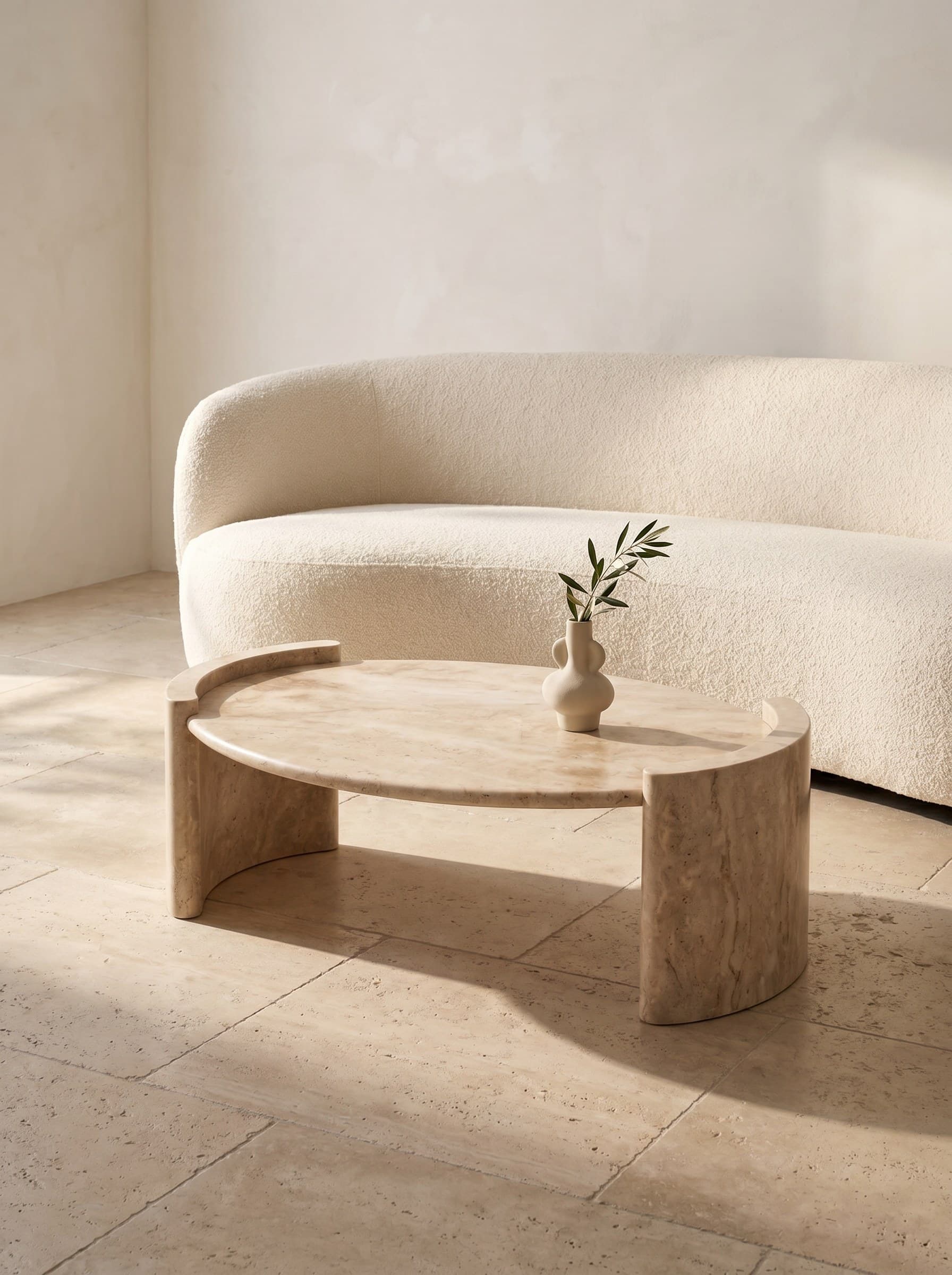
Travertine is one of the most versatile stones in interior design today, and that is exactly the question we hear most: does it fit my style? The short answer is yes to almost all of them, but for a different reason in each. Its warm tone, porous texture and one-of-a-kind veining make it as at home in a sleek modern loft as in a whitewashed mediterranean villa.
This guide goes style by style. For each one we cover what defines it, why travertine belongs there, how to tell if it is right for you, and which pieces from our collection to start with. Every Pietra by Bianca piece is hand-carved to order, so the stone is chosen for your space, not the other way around.
Travertine style by style, at a glance
Where travertine fits in each style at a glance, with the palette and shape that suit it.
| Style | Why travertine fits | Palette | Best shape |
|---|---|---|---|
| Modern | Adds sculptural weight and warmth to clean lines | Cool neutrals, greige to charcoal, black-steel accent | Straight block, sharp edge |
| Organic modern | Natural stone that lends itself to soft, water-worn curves | Sand, oat and clay, low contrast | Ovals, pebble-like bases |
| Minimalist | Holds the eye through texture and veining, not colour | Near-monochrome, cream, sand and chalk white | Cube, cylinder, bare top |
| Japandi | Its veining embodies wabi-sabi, matte and tactile with wood and linen | Muted earth tones, greige and matte black | Low silhouettes, round tops |
| Mediterranean | It is its origin, it belongs to southern architecture | Lime wash, warm sand, olive and terracotta | Solid volumes, monolithic tables |
| Mid-century | Stone tables signed the era and balance its light lines | Walnut and camel, mustard and rust accents | Ovals, sculptural or walnut base |
Travertine in a modern interior
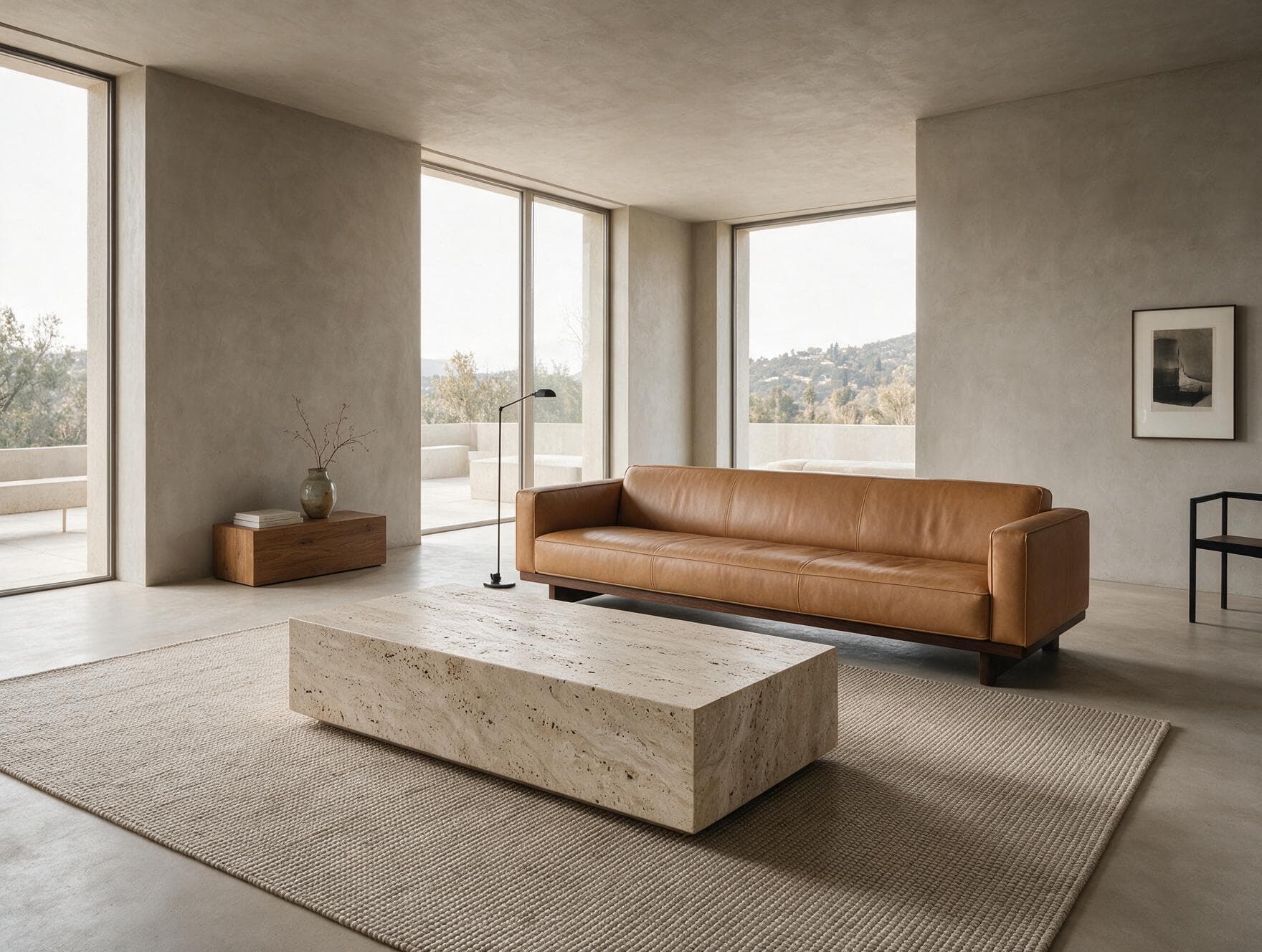
Modern and contemporary interiors are built on clean lines, confident volumes and a short list of well-chosen materials. Their risk is coldness: too much glass, steel and white can feel like a showroom. This is exactly where travertine earns its place: it brings sculptural weight and mineral warmth without breaking the discipline of the lines. A honed, matte stone table in a neutral room becomes the quiet anchor that makes the whole scheme feel considered rather than clinical.
How to decide: choose travertine for a modern interior if your palette is already neutral and you want warmth from material rather than colour. One strong piece is enough, modern rooms reward restraint.
Colours and materials
Keep it tonal and cool-neutral, greige, warm grey, off-white and charcoal, with black steel or bronze as the only accent. Let travertine be the single earthy note: in a modern room the interest comes from material and line, not from colour. Pair it with oak, linen and glass.
Shapes and forms
Straight edges and clean rectangular volumes. A single-block table, a thick slab top and sharp geometry read as one confident architectural mass, no visible joints, nothing decorative.
- The Luna coffee table, a single-block rectangular volume, as pared-back as modern asks for.
- Browse the full range of coffee tables and dining tables in clean, architectural forms.
Travertine in an organic modern interior
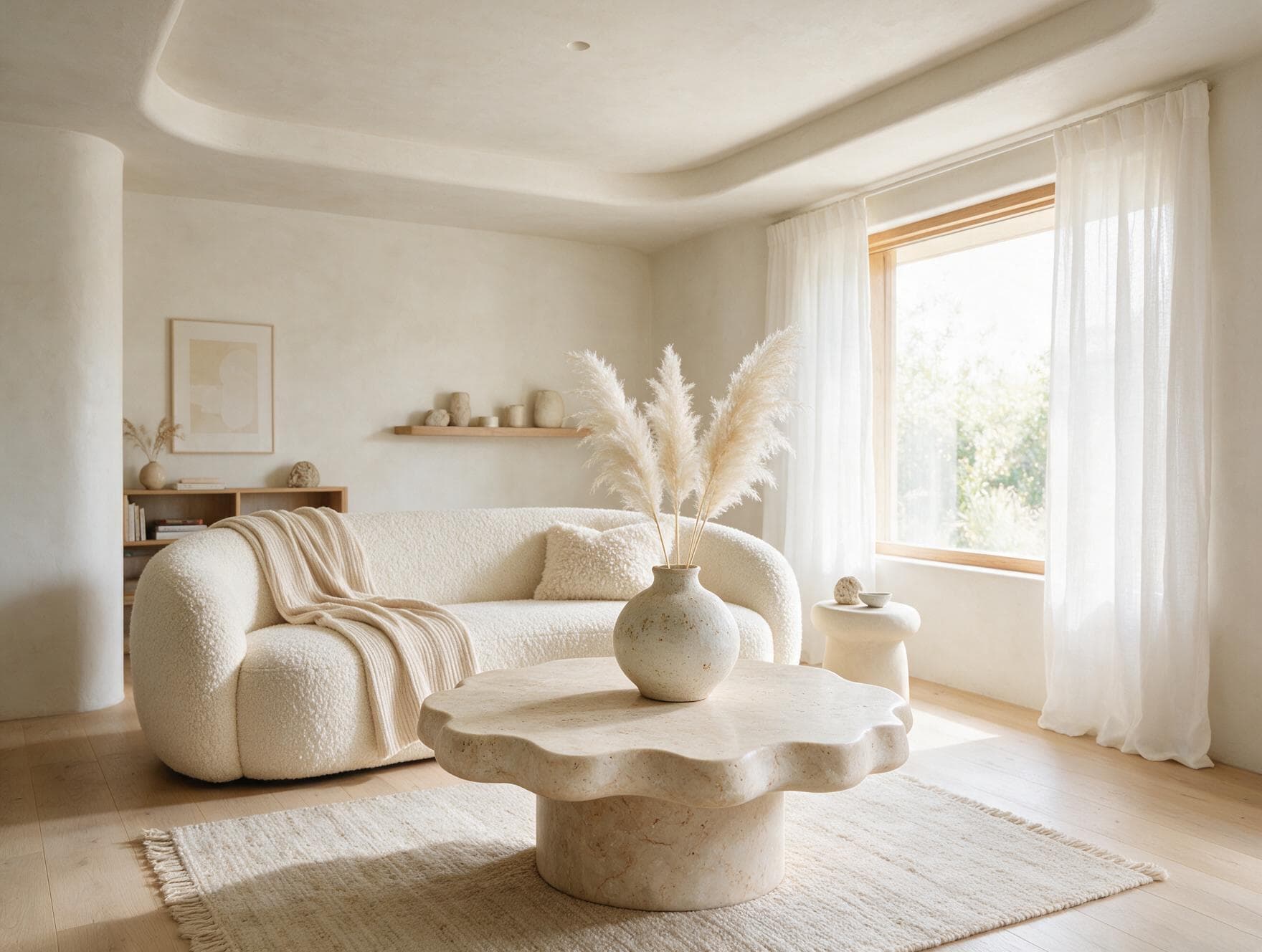
Organic modern is where clean contemporary lines meet natural materials and soft, rounded forms, curves instead of corners, and surfaces that look shaped by hand or by time. Travertine is almost the material that defines it: it is genuinely natural stone, and it takes beautifully to soft silhouettes, rounded edges and volumes that seem gently eroded.
How to decide: choose it here if you are drawn to warmth and movement rather than hard geometry. The look is calm but never flat: the veining does the work a bold colour would do elsewhere.
Colours and materials
Warm sand, oatmeal, clay and soft ochre, kept low in contrast. Travertine’s cream tone sits at the centre; surround it with pale wood, unglazed ceramic and boucle rather than bright accents.
Shapes and forms
Curves over corners, oval and kidney tops, cylindrical or pebble-like bases, rounded edges. The more a piece looks shaped by hand or worn by water, the more it belongs.
- The Giada nesting coffee tables, round, soft-edged, endlessly rearrangeable.
- The Onda console, a wave in stone for a hallway or behind a sofa.
Travertine in a minimalist interior
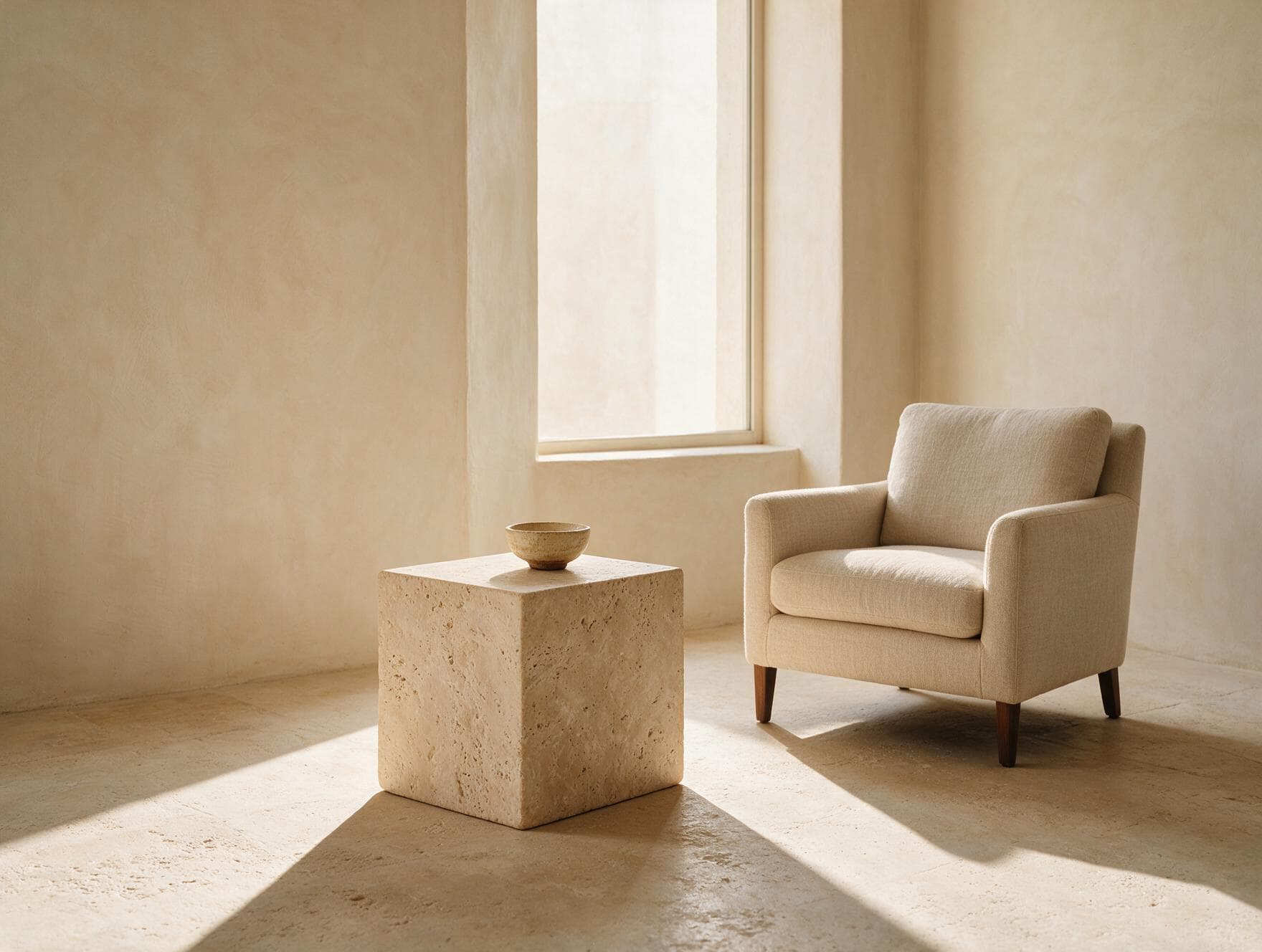
Warm minimalism, not the cold, clinical kind, keeps only what matters and asks each object to hold its own. In a near-empty room a piece cannot hide, so it has to be worth looking at. Travertine answers with texture and veining instead of colour or ornament, replacing the hardness of pure white or polished concrete with an earthy tone that invites you to stay.
How to decide: choose it if your instinct is to subtract. Fewer pieces, better chosen: a single well-placed travertine volume can anchor an entire room. Keep everything else quiet and let the stone be the one thing the eye returns to.
Colours and materials
A near-monochrome of cream, sand and chalk white, one tone throughout. No accent colour is needed: the stone’s veining is the only pattern the room should carry.
Shapes and forms
Elemental geometry: the cube, the cylinder, the plain slab. One pure form, generously spaced, nothing decorative, the piece works because it is complete in itself.
- The Terra side table, a pure travertine cube, minimalism distilled.
- A Torre pedestal for a single sculptural object, or the compact Luna for a spare living room.
Travertine in a japandi interior
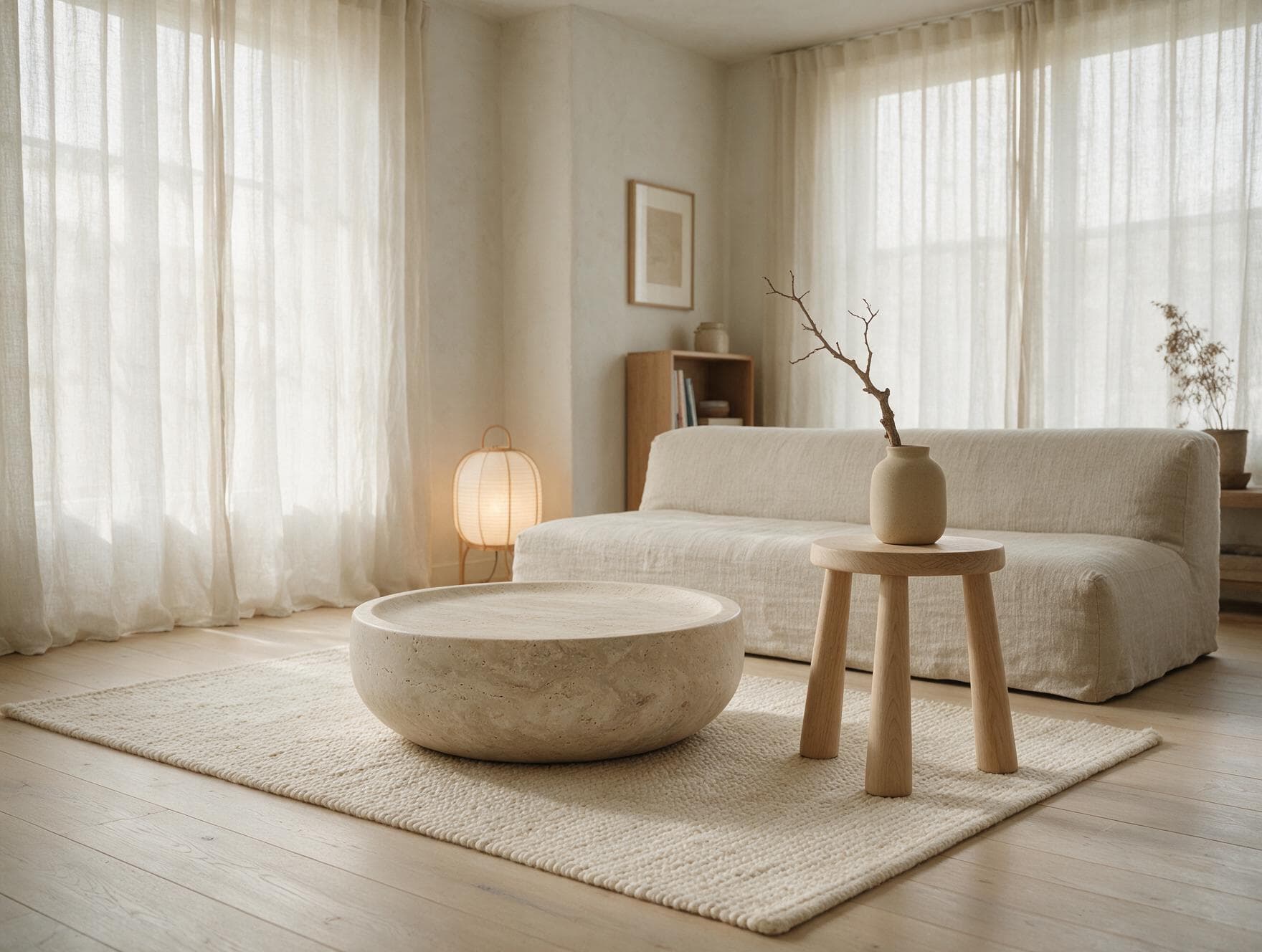
Japandi unites Japanese warmth and Scandinavian restraint through one thing: honest, natural material. Travertine’s ever-changing veining embodies the wabi-sabi idea of imperfection as beauty, and its matte, tactile surface sits perfectly among pale wood, linen and ceramic. It is perhaps the style the stone is most closely bound to.
How to decide: choose it if you want calm rooms made of a few natural elements, in muted, earthy tones. It is a style we cover in depth in its own guide.
Colours and materials
Muted earth tones, clay, greige, warm grey and matte black, with natural linen and pale wood. Keep everything matte and avoid cold white or gloss; the full palette is in the travertine japandi guide.
Shapes and forms
Low, calm silhouettes with soft edges: round or gently organic tops on simple bases, in quiet balance with light wood, paper and ceramic.
- Read the full travertine japandi style guide for palette and styling.
- The serene, round Roma coffee table is a natural starting point.
Travertine in a mediterranean interior
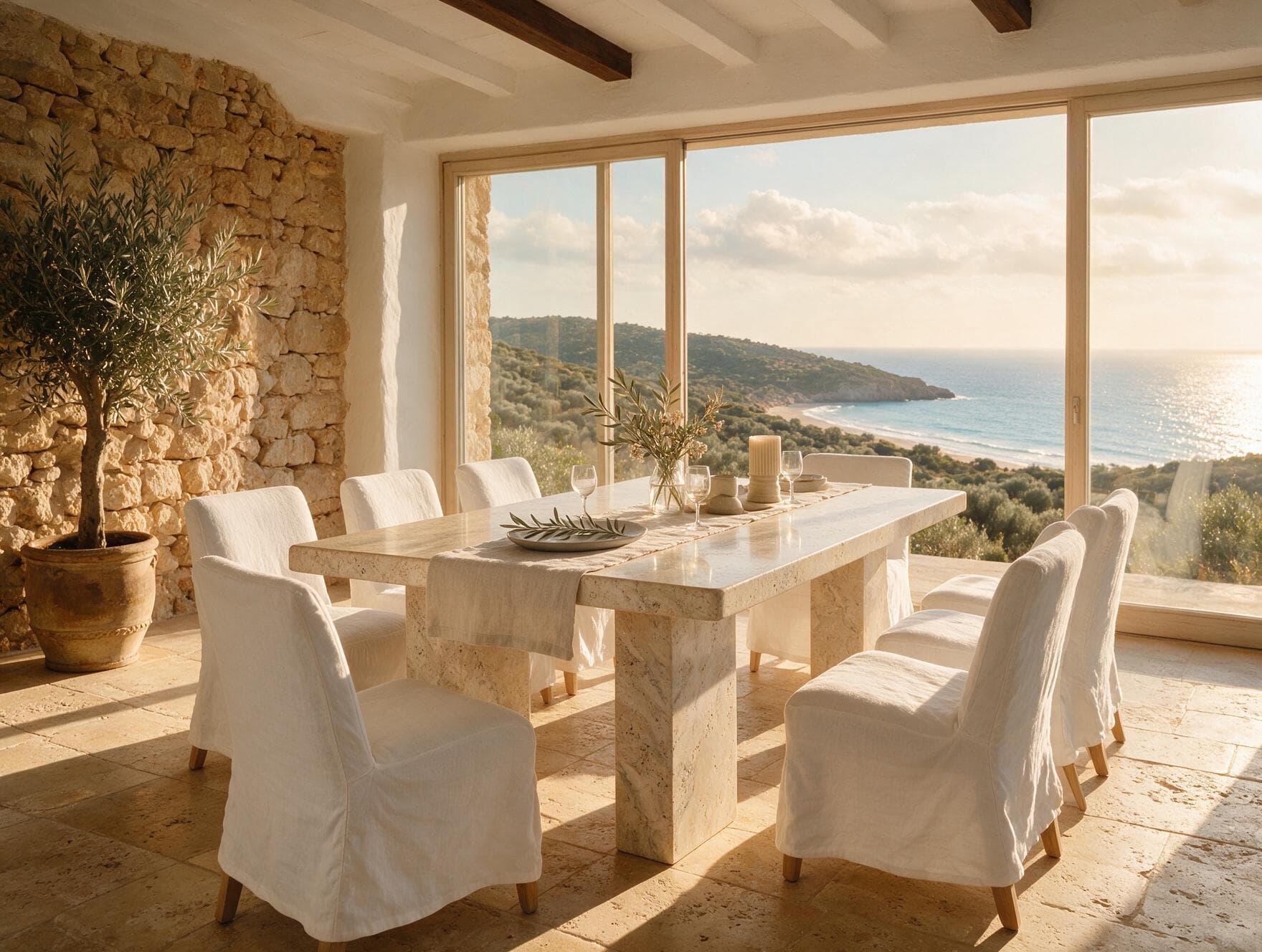
This is travertine’s origin and its home. The stone has shaped southern European architecture for millennia, from Roman façades to whitewashed courtyards and cool stone floors, so in a mediterranean interior it does not so much blend in as belong. Beside olive wood, terracotta, lime plaster and linen, it brings that unmistakable feeling of coolness, light and permanence.
How to decide: choose it if your home leans sun-washed and unhurried, with natural textures and a warm, sandy palette. Here the stone is meant to look lived-with.
Colours and materials
Whitewash and lime plaster, warm sand, olive green and terracotta, with travertine in its more golden tones. The palette is sun-bleached and warm rather than cool and grey.
Shapes and forms
Solid, generous, hand-worked volumes, thick slab legs, chunky monolithic tables, softly chamfered edges. A little rustic mass reads as authentic here, never heavy.
- The Masseria dining table, a monolithic travertine table made for long, slow lunches.
- The arched Arco console for an entryway, or the full range of consoles.
Travertine in a mid-century interior
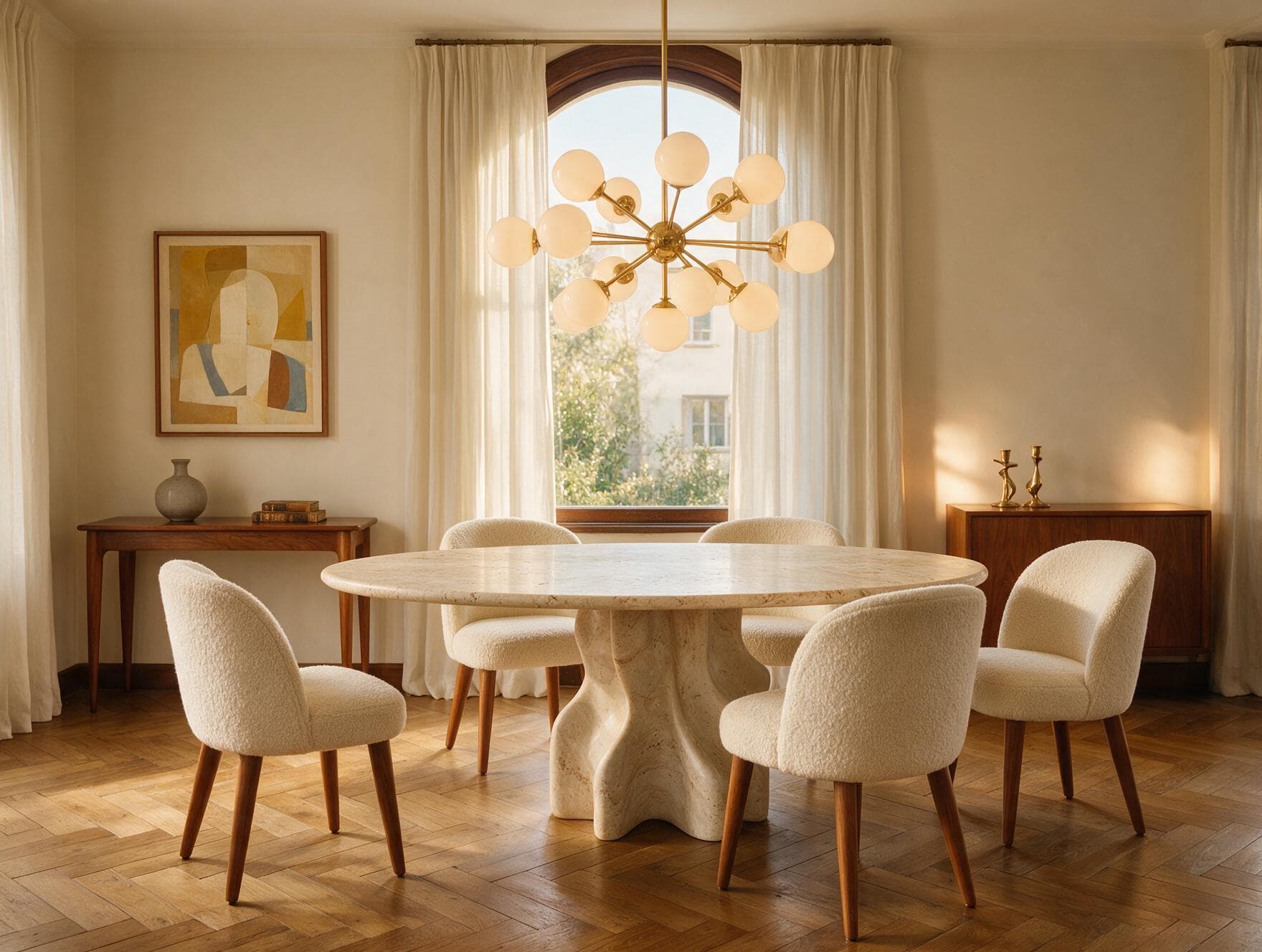
Mid-century interiors live on warm woods, tapered legs and the confident, sculptural shapes of the 1950s and 60s. Travertine belongs to that story: stone coffee and dining tables were a signature of the era’s most collected designers. A travertine top, especially over a sculptural base or a walnut frame, is a direct, knowing nod to it, and the stone’s mass balances the lightness of the period’s lines.
How to decide: choose it if you mix vintage and contemporary and want one grounding, timeless element among the wood and the curves. A single travertine table is usually all it takes to tie the era to today.
Colours and materials
Warm walnut and teak, cream and camel, with mustard, rust or burnt-orange accents and touches of brass. Travertine’s neutral warmth grounds the era’s bolder colour.
Shapes and forms
Organic ovals and soft boomerang forms, tapered wooden legs, sculptural stone bases. A travertine top over a walnut frame or a carved base is the definitive period pairing.
- The oval, sculptural Marea dining table, a period silhouette in solid stone.
- The architectural, split-level Siena coffee table for a modernist living room.
The common thread: why it fits almost everything
If one material serves such different styles, it is because its value lies not in fashion but in the matter itself: a warm tone, a living texture and veining that never repeats. That is why travertine does not go out of date, we examined that in this article, and why it stays among the leading materials, as we set out in the 2026 stone furniture trends.
Whatever your style, the decision comes down to three things: tone (cream and sand are the safest across styles), finish (honed and matte is the most versatile) and scale (one confident piece beats several timid ones). Explore the material in the travertine collection, or tell us about your room through our custom-made service, we select the block with you before the first cut.
Frequently asked questions
What interior styles does travertine suit?
Travertine works especially well with modern, organic modern, warm minimalist, japandi and mediterranean styles. Its earthy tone and natural texture also bring warmth to classic and mid-century interiors.
Does travertine work in a modern interior?
Yes. It is one of its most natural settings: it brings sculptural weight and warmth to the clean lines of contemporary design, especially in a honed finish and neutral tones alongside oak, linen and black steel.
Is travertine a good choice for a minimalist living room?
Yes, above all in warm minimalism. In a room of few objects, the stone holds the eye through texture and veining rather than colour, replacing the hardness of pure white or concrete.
Does travertine look good in a mediterranean home?
Perfectly, it is its origin. It has been in southern European architecture for centuries and pairs naturally with olive wood, terracotta and whitewashed walls.
Does travertine work in a mid-century interior?
Yes. A travertine top with clean lines, especially on tapered legs or a walnut base, sits comfortably alongside the warm woods and shapes of the 1950s and 60s, adding a mineral note that keeps a room full of vintage from feeling like a museum.
The collection
The stone, in person
Every piece is hand-carved to order, with the unique veining of its block. Start with the coffee tables.