
Journal
How to clean and seal a travertine table
·The Pietra team
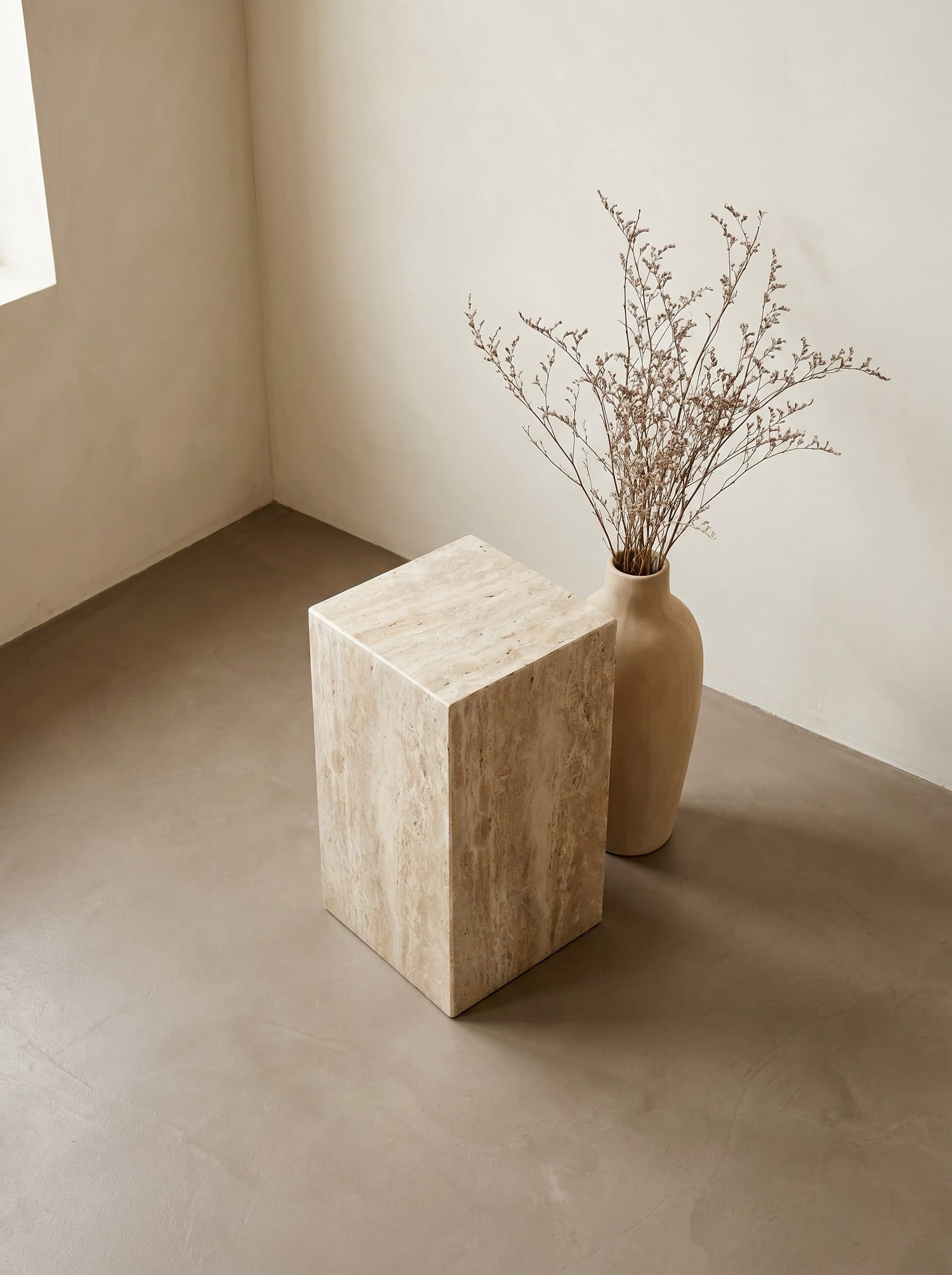
There is a persistent misunderstanding about travertine: that it is delicate. It is not: the Colosseum has stood in open weather for two thousand years. What it is, is specific: a calcareous stone that reacts to acids and, being naturally porous, is grateful for a sealant. Respect those two rules and you will live with your table for decades without drama.
This is the routine we recommend for every piece that leaves the atelier, the same one we apply before delivery. Ten minutes of reading that will extend the life of the stone more than any miracle product.
Everyday cleaning
Day to day, less is more. Travertine does not want an arsenal: it wants warm water, a pH-neutral soap and a cloth that will not scratch.
- 1.Remove dust with a soft, dry cloth or a microfibre duster. Dust under friction behaves like a fine abrasive.
- 2.Mix warm water with a few drops of pH-neutral soap (unscented hand soap, or a dedicated natural stone cleaner).
- 3.Wipe with a well-wrung cloth, damp, never soaked. Travertine does not need puddles.
- 4.Rinse with a second cloth and plain water so no soap film is left behind.
- 5.Always dry with a clean cloth. It is the step almost everyone skips, and the one that prevents water rings.
What your table will not forgive
The blacklist is short and worth knowing by heart. All of these attack the calcite and leave dull marks no cloth can fix:
- Acids: vinegar, lemon, limescale removers, ammonia and most supermarket multi-surface sprays.
- Bleach and chlorinated cleaners: they discolour the stone and degrade the sealant.
- Abrasives: green scouring pads, scouring powders, creams with micro-particles.
- Steam: steam cleaners force moisture into the pores and break down the seal.
- And one habit: do not leave sweating glasses or cut citrus sitting on bare stone for hours. Coasters and boards: the eternal allies.
Sealing: why, what with, and how often
A penetrating sealer (impregnator) forms no film and adds no shine: it sits inside the pores and slows the absorption of liquids. It does not make the stone invincible: it buys you time. With a healthy seal, spilled wine will wait calmly for several minutes until the cloth arrives.
Every one of our tables ships factory-sealed. From there, the recommended cadence is every 12–18 months under normal use, and every 12 for dining tables in heavy rotation. The water-drop test never lies: pour a teaspoon of water on the surface; if it still beads after ten minutes, the seal is alive; if the stone drinks it and darkens, it is time to renew.
- 1.Clean the table with neutral soap and let it dry completely (24 hours is ideal).
- 2.Apply a penetrating sealer suitable for calcareous stone with a cloth or brush, in a thin, even coat.
- 3.Let it work for the time the manufacturer indicates: usually 10–20 minutes.
- 4.Wipe off all excess with a clean cloth before it dries: the sealer works inside the stone, not on top of it.
- 5.Wait 24–48 hours before using the table with liquids. Done until next year.
Stain SOS: first aid
When something spills, order matters: blot, never rub. Press with paper towel or a dry cloth to lift the liquid; rubbing only spreads the stain and pushes it into the pores.
For a stain that has already penetrated (oil, wine, coffee), the classic remedy is a poultice: a paste of baking soda and water over the stain, covered with cling film, for 24 to 48 hours. As it dries, the paste draws the stain out. Remove, rinse, repeat if needed. For dull acid marks (etching) on a honed finish, professional re-honing removes them; ask us before attempting aggressive home remedies.
Knowing the material helps you care for it: our guide to travertine versus marble explains why this stone behaves the way it does.
The travertine calendar
For those who prefer it at a glance, this is the complete upkeep of a travertine table across the year:
- Daily: nothing. Coasters under drinks, a cloth if something spills. Travertine looks after itself.
- Weekly: a dry microfibre cloth for dust; damp with neutral soap if the table works hard.
- Monthly: check the high-traffic zones (where the cups land, where dinner is served) in case they ask for attention.
- Every 12–18 months: the water-drop test and, if due, a renewal of the sealer. Twenty minutes of actual work.
- Every few years: after hard use, a professional re-honing returns the surface to day one. Stone allows it as many times as needed: the definitive advantage over any veneer.
A routine that fits in one sentence
Neutral soap and a soft cloth weekly, coasters without exceptions, a re-seal every year. That is all: travertine asks for nothing more to stay with you twenty years, and to age better than almost any other material in your home.
The same routine applies to a travertine coffee table and to a side table by the sofa. And if your piece has a stain that will not give in, write to us with a photo: diagnosing stone is part of the craft.
The collection
The stone, in person
Every piece is hand-carved to order, with the unique veining of its block. Start with the coffee tables.