Stone tables for the dining room
The published dining room is one stone family: travertine, at about 75 cm high, the height the size guide treats as standard. There are six tables and three shapes. They are handmade to order, in 60–90 days, and delivered to your door, in Europe.
Dining tables
View all




Need another size, stone or finish? Tell us about your piece
The process
From blueprint to your living room
Each piece is handmade to order, with a 60–90 day make-and-deliver lead time.
 01
Planning
Every piece begins as a technical drawing: each measurement and curve is drafted to the millimetre before any stone is touched.
 02
Fabrication
We select the blocks and our artisans carve, turn and hone the stone by hand in the atelier, one piece at a time.
 03
It arrives at your home
Each piece is handmade to order in 60–90 days. It arrives well packed and is delivered to your door, ready to place wherever you like.
Sizes and seats
The Journal guide uses two figures: about 60 cm of width per person and about 100 cm clear to the wall or the nearest furniture. With that, and with what each product page already says, the six tables sit like this.
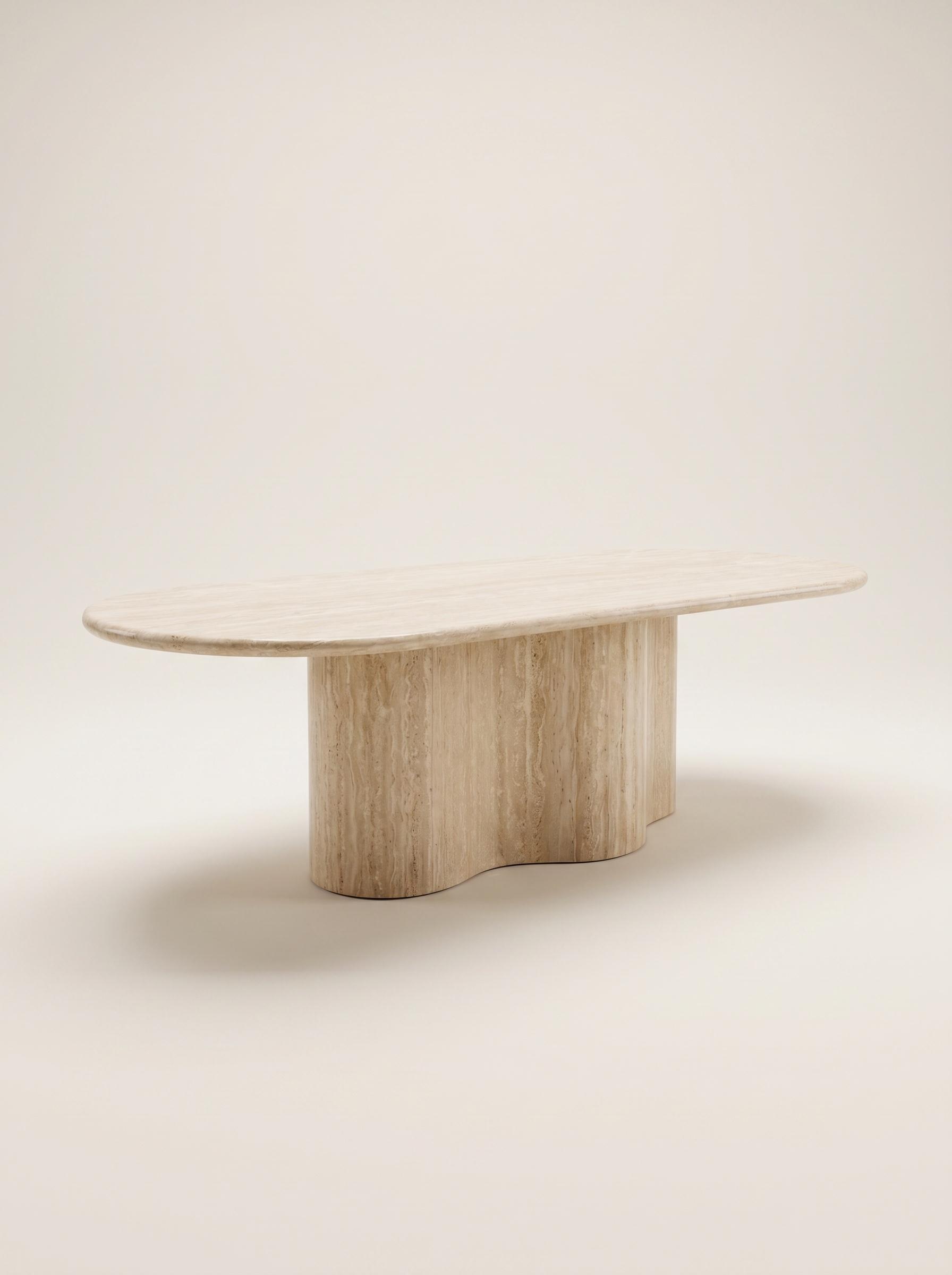
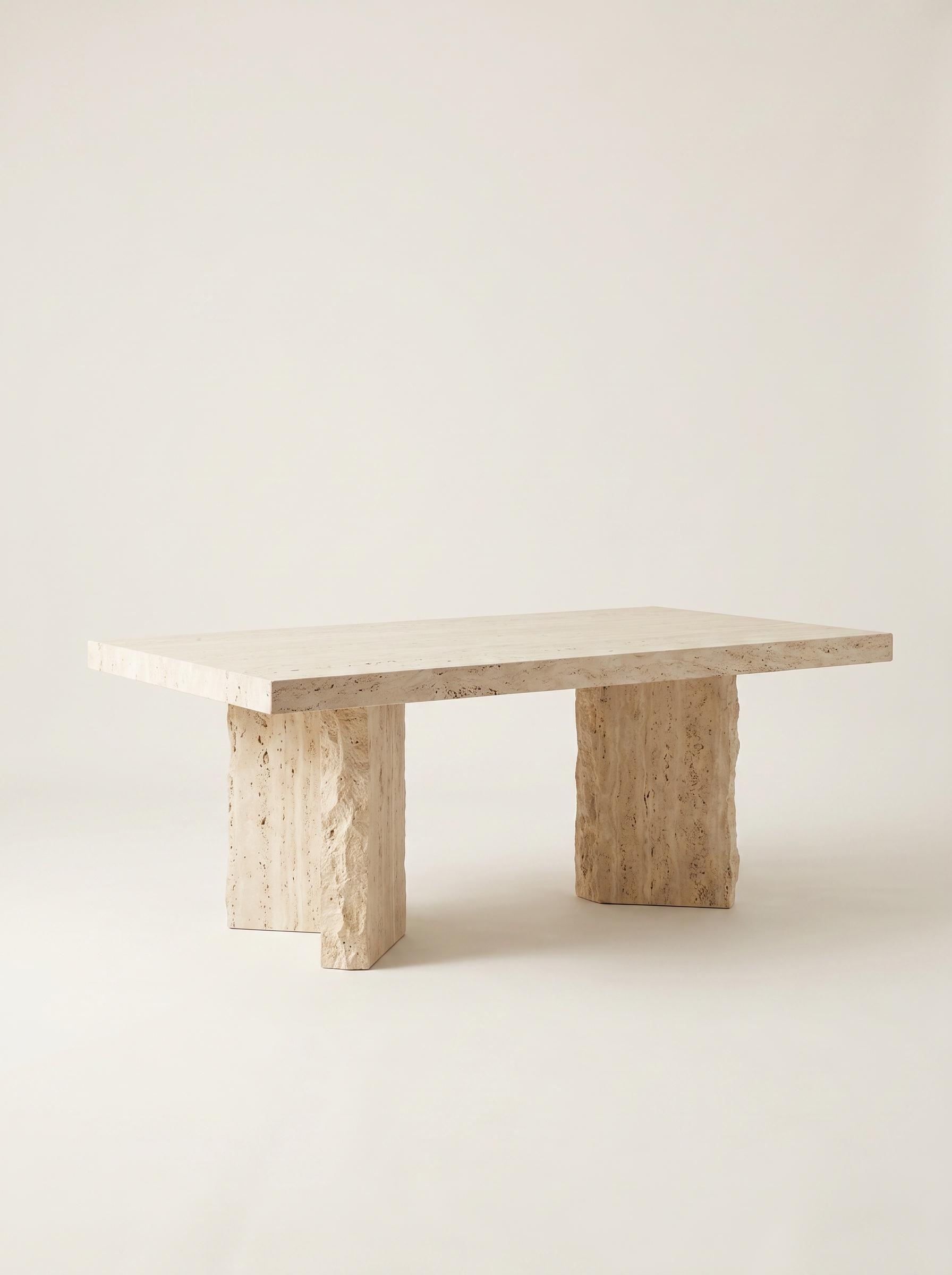
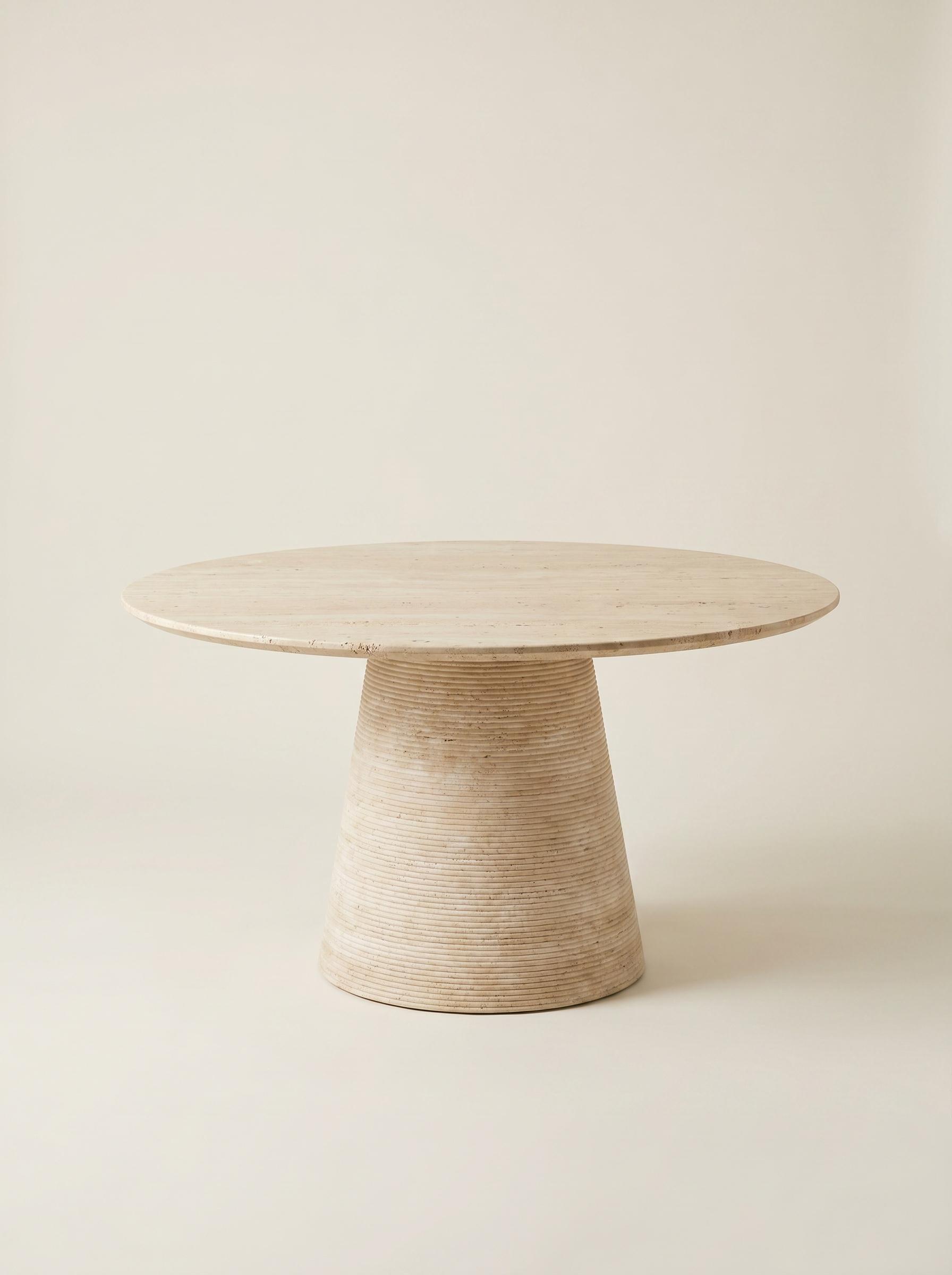
Tonda, Ø120 × 75 cm: its page gives it for four day to day and for six when the seating is tighter. The guide puts a round table for four at about 110 cm and one for six at about 130 cm. Conca, Ø130 × 75 cm, matches that six-seat diameter. Sella is offered at 120 × 85 × 75 cm, which its variant describes for four, and at 240 × 100 × 75 cm, which it describes for eight to ten. Masseria publishes 220 × 100 × 75 cm and its page speaks of eight to twelve, with other lengths from 90 to 240 cm made to order; in the guide, 220 × 100 cm is the rectangle for eight. Ovale, 200 × 100 × 75 cm, is presented on its page for eight to ten. Marea, an oval of 240 × 105 × 74 cm, does not fix a number: the guide places an oval for eight at about 220 × 110 cm and one for ten at about 280 × 110 cm.
Round, oval or rectangular
Round, with no head of the table: Tonda and Conca. Rectangular: Masseria and Sella. Oval: Marea and Ovale. The guide puts it this way: a round table brings faces closer and suits a narrow path; a rectangle yields more per metre; an oval joins the capacity of one with the softened corners of the other.
The published height sits between 74 and 75 cm. That is the figure the guide calls standard, meant for a chair with a seat at about 45 cm.
Travertine on a daily table
Five of the six tables are listed as honed and filled. Masseria is the exception: the finish on its page is natural quarry. The dining pages ask for a soft cloth, neutral soap, and not to leave wine or citrus on the stone for hours. The seal is renewed once a year.
There is no published marble dining table. If the marble vein is what you want, the route is the made-to-order service. The marble page explains how it differs from travertine, and which marble pieces are actually in the catalogue (a console and a stand, not a dining table).
Before you order
How many people do they seat?
It depends on the product page and on the clearance in the room. Tonda (Ø120) is described for four, and for six when seating is tighter. Conca (Ø130) matches the guide’s round table for six. Short Sella, for four; long Sella, for eight to ten. Masseria (220 × 100) speaks of eight to twelve. Ovale (200 × 100), of eight to ten. Leave about 100 cm clear around the table, as the guide asks.
How high are they?
Between 74 and 75 cm. That is the height the guide calls standard, with a chair seat at about 45 cm.
Is there a marble dining table?
Not in the published catalogue. All six are travertine. A marble dining table is made to order.
Round or oval?
A round table (Tonda, Conca) has no head and brings faces closer. An oval (Marea, Ovale) gives more length with softened corners. A rectangle (Masseria, Sella) yields more per metre.
Learn more